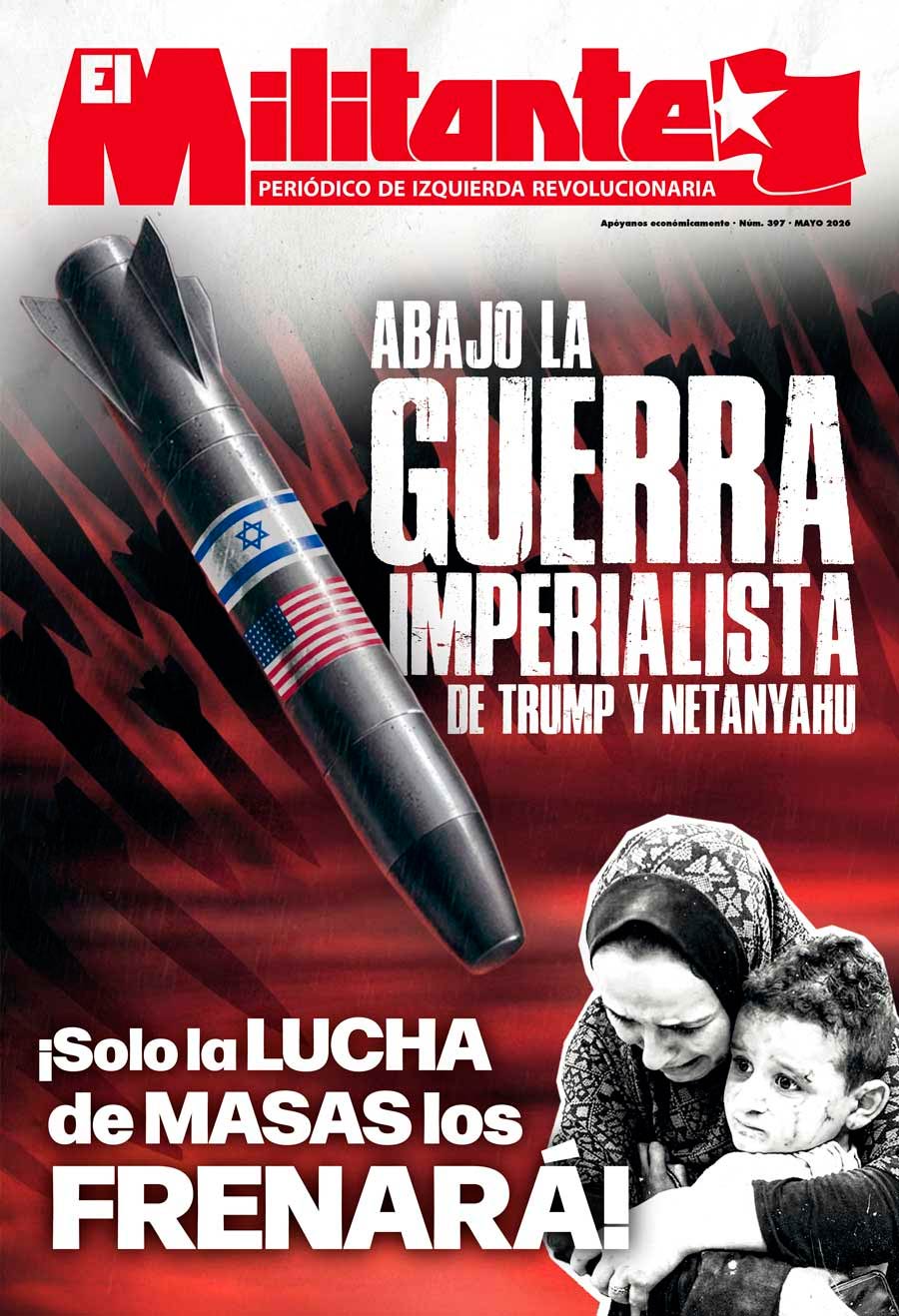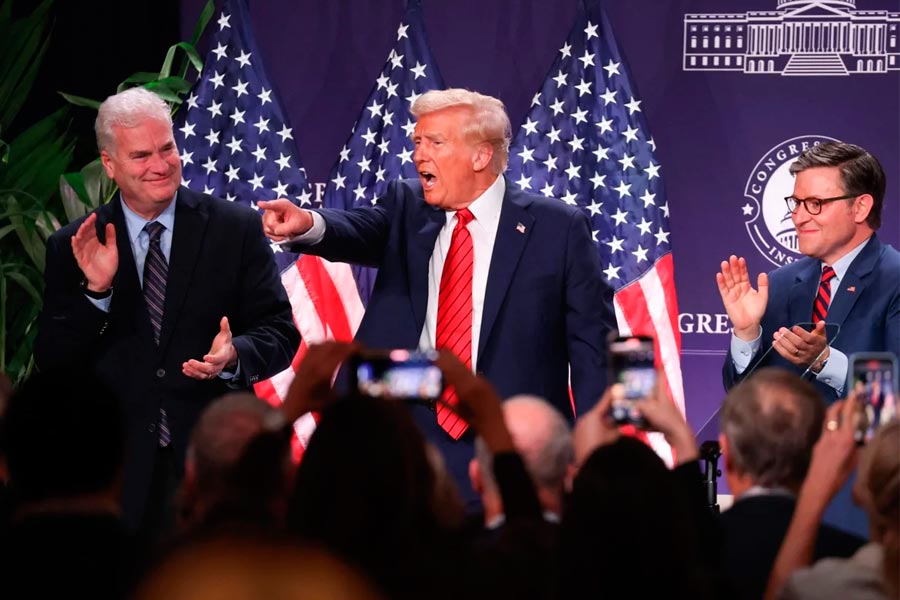




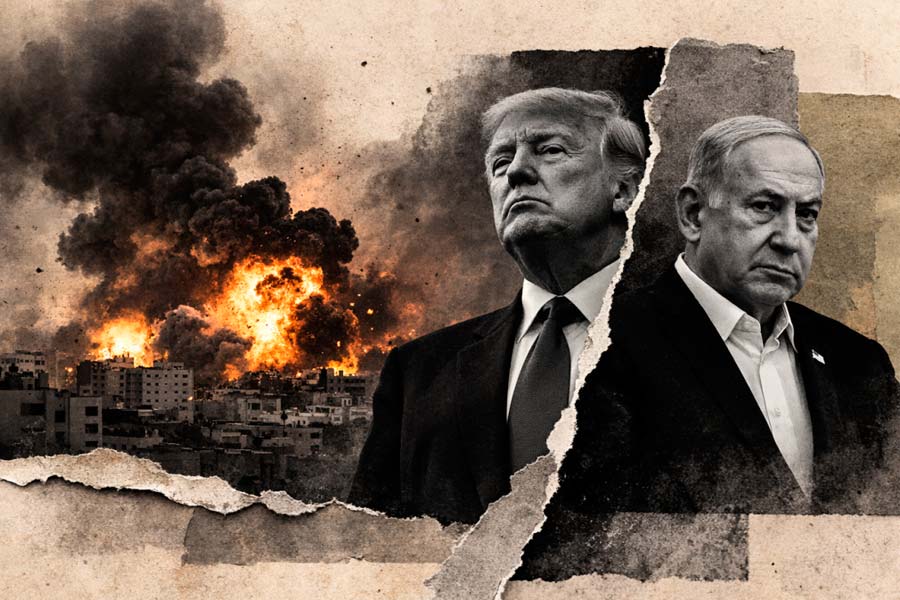
The world stands stunned by another display of barbarism. Two genocidal leaders have decided to launch a new imperialist war with unpredictable consequences. As the days pass, the death toll among civilians rises—exceeding 2,000 according to the latest reports—and hundreds of thousands are fleeing their homes whilst images of destruction in Iran and Lebanon continue to pour in, and the effects on the global economy are severely affecting millions of workers.
The bloodiest and most counter-revolutionary machine in history, US imperialism, is back in action—not to defend democracy or the Iranian people, but to control the oil of a sovereign country and gain geostrategic advantages in the struggle for global hegemony.
But predictions of a war lasting just a few days that would force the regime to topple have collided with the harsh reality. Trump and Netanyahu have eliminated a large part of the fundamentalist leadership in Tehran, starting with Supreme Leader Khamenei, the Defence Minister and the head of the Islamic Revolutionary Guard Corps, but none of this has prevented the fighting from spreading across the Middle East, nor has it removed the huge question mark hanging over the outcome of this conflict.
The possibility that Washington and Tel Aviv might fail in their attempt to violently overthrow the regime of the mullahs, and that they might provoke a wave of mass protests against their militarist intervention both within the US, in Europe and across the world, grows with every hour that the conflict drags on.
As a result of this intervention, the military, geopolitical and economic situation has become extraordinarily critical, and its consequences for the class struggle and the process of raising the consciousness of millions of oppressed people will be no less significant.
A qualitative leap in Washington’s bloody escalation
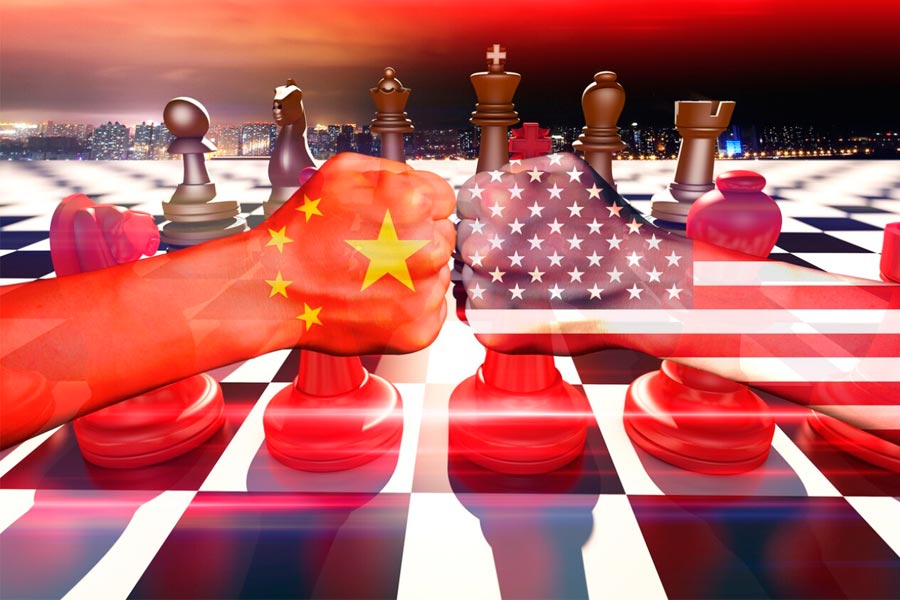
This war, like the conflict in Ukraine, the genocide in Gaza or the intervention in Venezuela last January, can only be understood as part of the struggle waged by US imperialism to contain the rise of the bloc led by China and Russia.
Trump, and the powerful sector of the ruling class he represents, have concluded that restoring the US to the industrial power it once was, and thereby dominating the global economy, is an illusion. The difficulties of turning back the wheel of history are all too evident.
A process of massive economic repatriation to develop ‘Made in USA’ manufacturing, and to speak on equal terms with China (which currently accounts for 40% of global goods production), neither mobilises nor excites US big business when stock market speculation, the debt trade and fiscal plunder have been providing them with formidable dividends for decades.
Trump cannot fail to recognise that his tariff offensive against China has failed, that the objectives of reducing his trade deficit with the Asian giant have also failed, and that in multiple fields—be it renewable energy, the automotive sector, e-commerce, strategic raw materials, global supply chains, or science, robotics and artificial intelligence—the US disadvantage is only growing.
For these reasons, the only way to fulfil the MAGA mandate is to deploy the enormous military force at the US’s disposal in the most radical and belligerent manner. Those who believed that American supremacy would be reborn by mobilising the country’s internal resources and practising isolationism failed to understand both the organic nature of American decline and the true aspirations driving the economic nationalism of Trumpism. The attempt to regain lost splendour led to new and brutal military adventures abroad, to even more aggressive imperialist action.
Trump, and the section of the bourgeoisie that supports his actions, are convinced that they have the means to inflict serious damage on their competitors and influence the course of the global economy. The strategy of gaining control over the global energy supply is not a mere detail; it is a guiding principle at this stage. Their objective is to control the production and supply of Liquefied Natural Gas (LNG) and key oil reserves.
The Intervention in Venezuela and the appalling subservience of Delci Rodríguez, who has accepted the entire Trumpist roadmap without so much as a murmur, coupled with the control of the Middle East by any means necessary, would make the US the leading fossil fuel power; and in terms of capitalist hegemony, this is crucial because it gives immense power and deterrent capability.
Of course, constantly resorting to war to make up for the structural weaknesses of its economy carries many risks. The US knows this, because it has bitten the dust on numerous occasions in recent decades. The intervention in Iraq, in Afghanistan, or the conflict with Russia using Ukraine as a battering ram, have not resulted in any victory for Washington.
But the US bourgeoisie—at least a highly influential sector within the current context, such as the major technological, energy and financial monopolies—has concluded that boldness in employing maximum force in its dealings with allies and adversaries can offer a crucial advantage, at least in the short term. And they are playing those cards to the max.
Betting on the disintegration of the EU by brute force, they announced the forthcoming annexation of Greenland, stoke the rise of the far right, impose militarist rearmament and draconian trade agreements, and the European bourgeoisie bows its head in absolute subservience. In case there were any doubts, with the coup in Venezuela they proclaim to the world that Latin America will always be their backyard.
And, above all, they fanatically back the Zionist entity in two respects: as a shock force to consolidate a balance of power favourable to Washington in a key area, and because they firmly believe in the messianic and colonialist project of a Greater Israel stretching from the Nile to the Euphrates, which the US ambassador in Tel Aviv, Mike Huckabee, justifies on the grounds of ‘biblical right’.
After all, like many other totalitarian leaders of the past, Trump and Netanyahu believe that with a good dose of violence, the course of events can be changed and the material basis of their domination expanded.
Militaristic terror is part of imperialism’s DNA. Hitler knew this all too well. But the sweeping triumphs of the Nazi leader, whom the British, French and American capitalists sought to restrain with their policy of appeasement, also backfired. Despite all his crimes, the Jewish Holocaust, the mass destruction and the deaths of millions of innocent people, the heroic resistance of the Red Army and the working-class masses across Europe defeated him. Ultimately, it was the class struggle that decided the outcome.
Trump and Netanyahu have gambled on starting a bloody war in a geostrategic area of unquestionable importance, and they have done so after convincing themselves that no power or circumstance can stop them. The genocide in Gaza and the West Bank, the blows dealt to Hezbollah in Lebanon, and the intervention in Syria and Venezuela have filled them with confidence to launch the ‘definitive’ offensive against Iran. Why not?
They have judged that the weaknesses of the fundamentalist regime, following the brutal repression in January against the defenceless Iranian population, provided them with the ideal opportunity to topple it, either through surrender, via a ‘friendly’ coup d’état, or through a ‘popular’ uprising. And yet, Iran is proving to be a far more complicated scenario than they anticipated.
Trump’s decision represents a qualitative leap that could well end up backfiring on Washington. For 45 years, the US never resolved to initiate a conflict of this magnitude with Tehran precisely because of the fear that it would spiral out of control and trigger regional and global destabilisation.
But Trump and key sectors of the ruling class have moved beyond that phase and their priorities have shifted. They believe that, if they dismantle the political and economic order they themselves forged after the Second World War—and which yielded such substantial returns following the collapse of the USSR and the downfall of Stalinism—they can once again bring the world to their feet.
And they are not wrong to think this way. The President of the European Commission, Ursula von der Leyen, has made clear her submission to the Trumpist agenda: “Europe can no longer be the guardian of the old world order, of a world that has disappeared and will never return”, and has urged all countries on the old continent to increase their military budgets and purchases of military equipment from… the US.
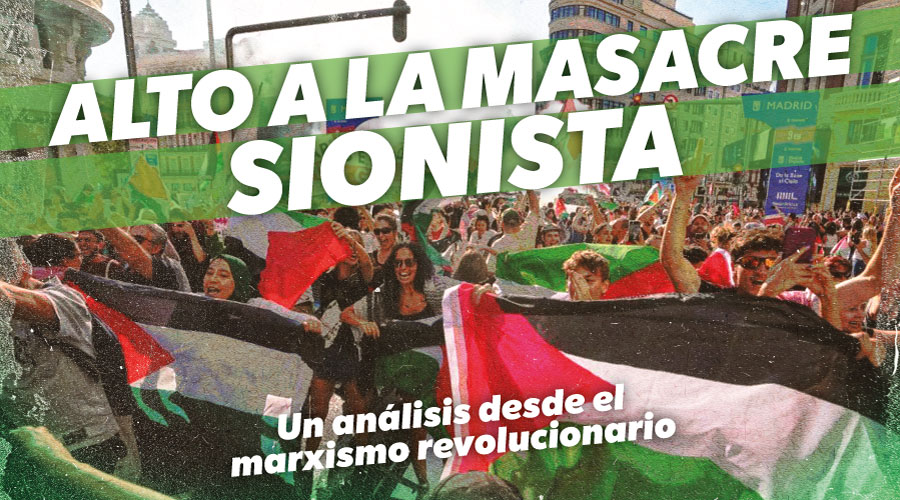
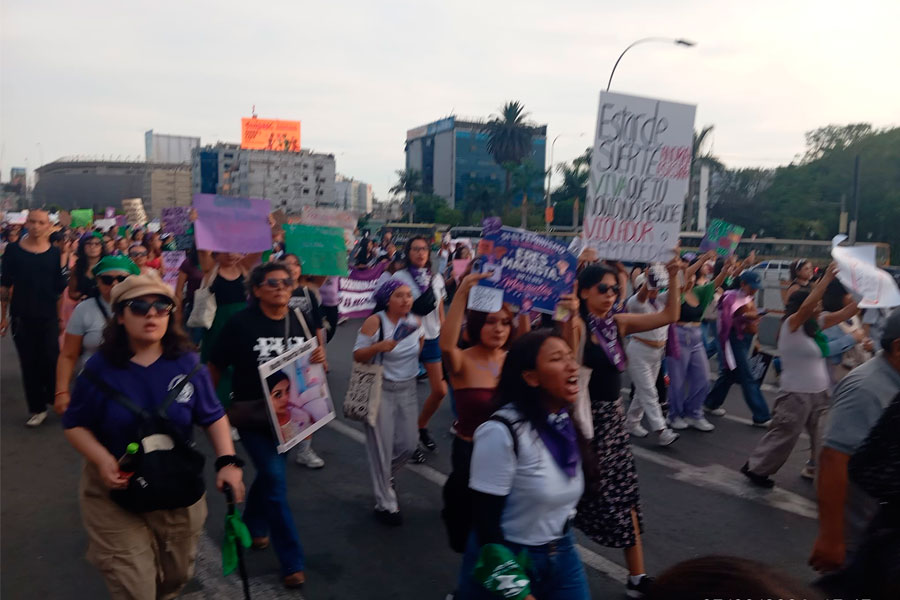
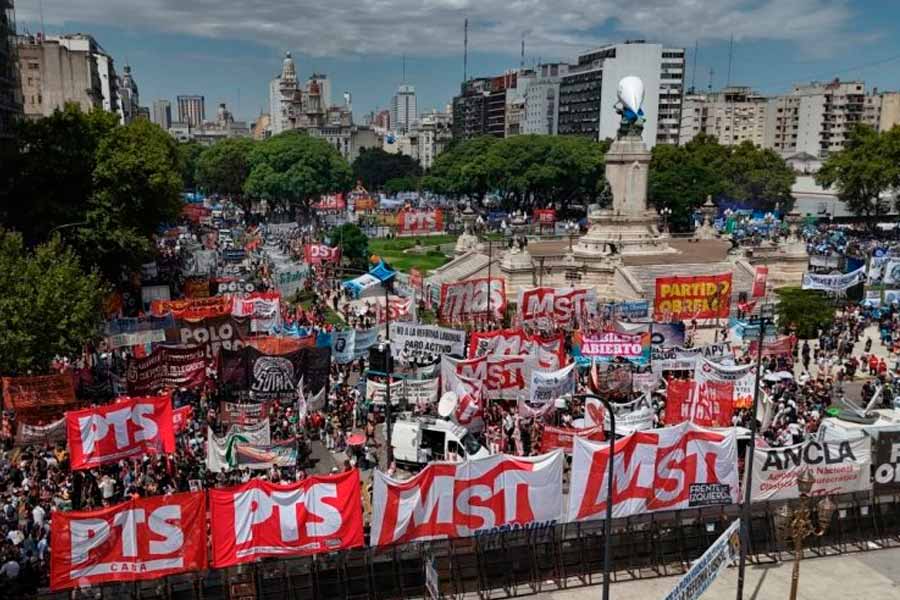
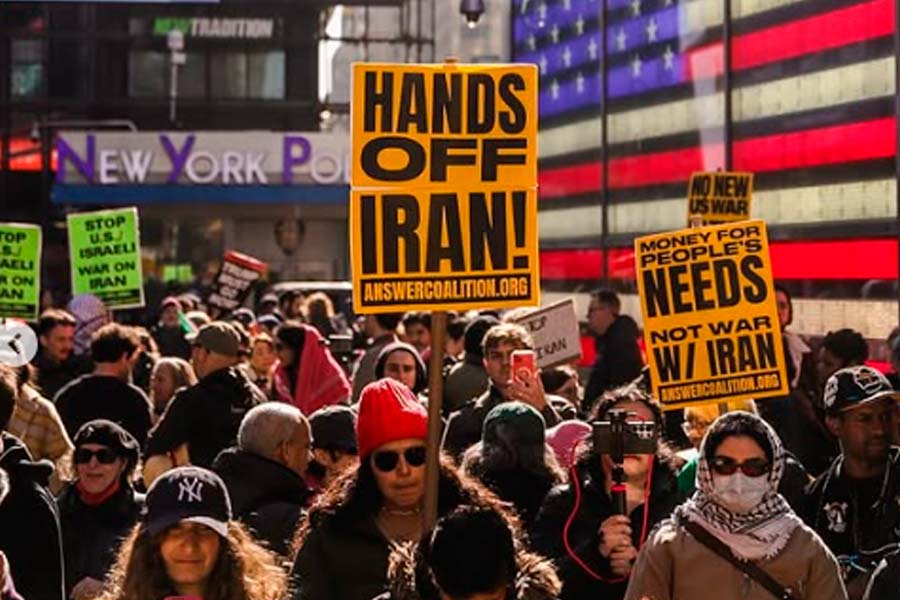
Nothing can be expected from the EU, from those rotten politicians in the service of capital, nor from international law, the UN or any criminal court. All of them grovel before their imperialist masters. As historical experience shows, the only real force capable of confronting this barbarism is the mobilised working class. We have seen this in the mass movement that has built internationalist solidarity in support of the Palestinian people, filling the streets across the globe. Or in the movement challenging the Trump administration’s authoritarian agenda, bringing together millions in ‘No Kings’ demonstrations and making possible the general strike in Minneapolis against the terror of the neo-Nazi ICE gangs. And it will also be mass struggle, strikes and social protest that will once again push this new criminal war against the ropes.
Tehran responds to the US and Israel, and their Middle Eastern allies
As we have concluded in previous statements, this war has nothing to do with the defence of democracy or women’s rights, which both Trump and Netanyahu are crushing in their own countries and across the globe. Nor is it even about Iran’s nuclear programme. The possibility of Iran acquiring the atomic bomb in the short term has been refuted by all IAEA reports and even by internal Pentagon and CIA documents.
Washington is seeking regime change in Tehran to take control of the oil and gas, reducing Iran to the status of a colonial protectorate and removing it from the orbit of China and Russia. An outcome that would deal a blow to both powers far greater than those they have suffered following the fall of Syria and Venezuela.
Obviously, Trump is also seeking to rebuild his support within the US and divert attention from the domestic crisis and the uprising against his racist and totalitarian policies, bolstering the confidence of the most reactionary sectors in the battle against the ‘internal enemy’—that is, the immigrant community, the native working class and the militant left. But according to the polls, only one in four Americans supports this war, and the rifts within Trump’s social base—widened following the publication of the Epstein case documents and the president’s involvement in his paedophile friend’s network—will not be mended by an act of aggression that could have a massive economic impact.
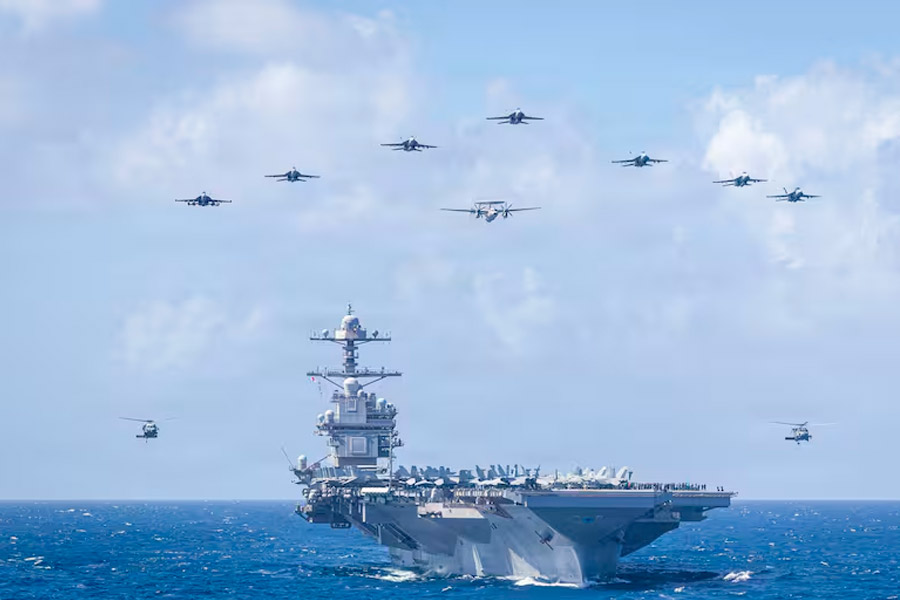
The truth is that neither the deployment of the largest US war fleet in decades, the brutal and indiscriminate bombing of Iranian territory, nor the targeted assassination of dozens of senior officials has succeeded in making Tehran wave the white flag.
Iranian drones and missiles are proving effective and capable of striking US military bases and interests in no fewer than 12 countries and dealing a serious blow to Israel itself, as they did in June 2025 during the ‘12-day war’. This is causing doubts and evident nervousness on the imperialist side, as well as internal criticism over the lack of an alternative plan to that of a swift and indisputable victory following the initial attack.
In less than 48 hours, Trump and his Secretary of State Marco Rubio had to abandon their triumphalist rhetoric promising a military walkover like in Venezuela, acknowledging that US casualties already incurred will not be the last, and that the war will be far more complicated and protracted than they had imagined. They speak of four weeks, but the Pentagon and CIA’s own analyses warn that it is difficult to set a timeframe and raise more questions than answers. Netanyahu himself, after promising a quick war, has been forced to admit that “it may take time, though not years”.
Recognising that the situation is not as expected, the State Department has ordered US citizens to leave neighbouring Iraq and recommended that those living in the Persian Gulf monarchies, including the ‘paradises’ of Abu Dhabi and Dubai, or in allied countries such as Egypt and Israel itself, leave as soon as possible. The UK is also preparing evacuation plans for the more than 100,000 British nationals residing in the Gulf, as are France and Germany, which are already facilitating arrangements for the departure of their citizens.
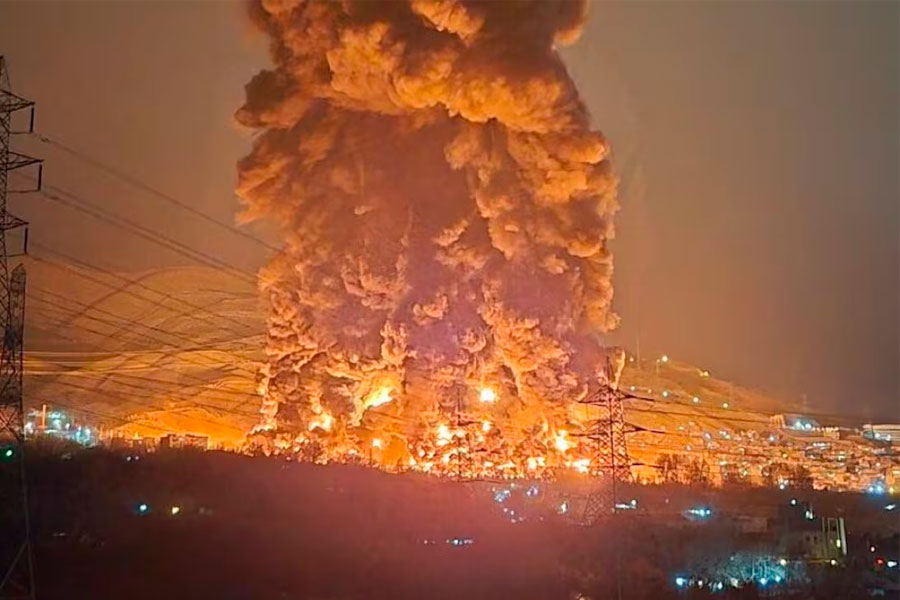
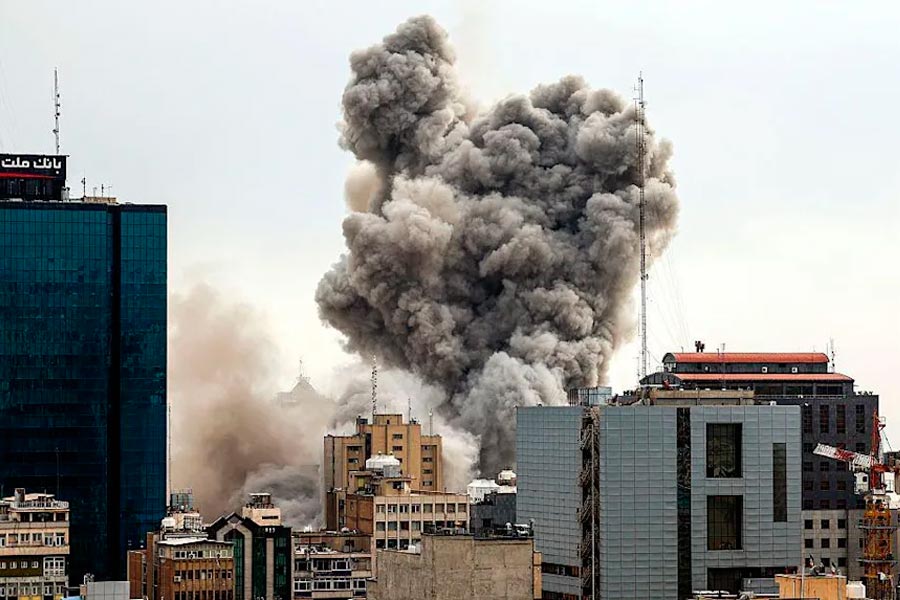
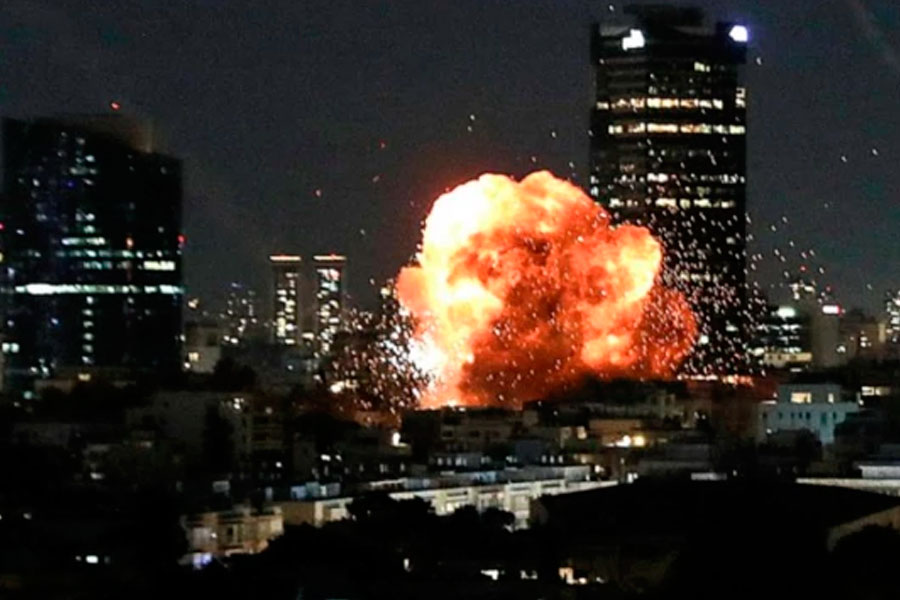
The escalation continues to intensify day by day. At the time of writing this update, the Zionist attack on Beirut has destroyed numerous neighbourhoods and driven hundreds of thousands of people towards safer cities in what is already a full-blown humanitarian catastrophe. As for Iran, on Sunday 8 March Israeli aircraft attacked four major oil depots, causing a toxic cloud to hang over Tehran, and the crude oil leaked into the sewer system, creating a ‘river of fire’ in many streets of the Iranian capital.
The intensification of bombing against Iranian and Lebanese populations, and against civilian and healthcare infrastructure—even reaching levels of savage destruction akin to those seen in Gaza—is on the table and will have multiple consequences.
Firstly, it will encourage international mobilisation against the war, deepening the movement against genocide. Secondly, it will accelerate divisions within Western imperialism, as is already happening with Pedro Sánchez’s refusal to allow the US to openly use the joint military bases at Rota and Morón for its operations, or the refusal of the Italian head of government, the far-right Meloni, to openly align herself with Trump, under pressure from the massive demonstrations against the Palestinian genocide that took place in Italy. And thirdly, but no less importantly, it would exacerbate the extremely severe impact of the war on the global economy, a factor that puts particular pressure on Washington and its allies.
The global economy in the spotlight
If the political effects of the war are proving dramatic, the economic ones are no less so. Saudi Arabia’s most important refinery, Ras Tanura, which produces 600,000 barrels of oil a day, has been paralysed, as has the Ras Laffan industrial complex in Qatar, the largest LNG production plant on the planet.
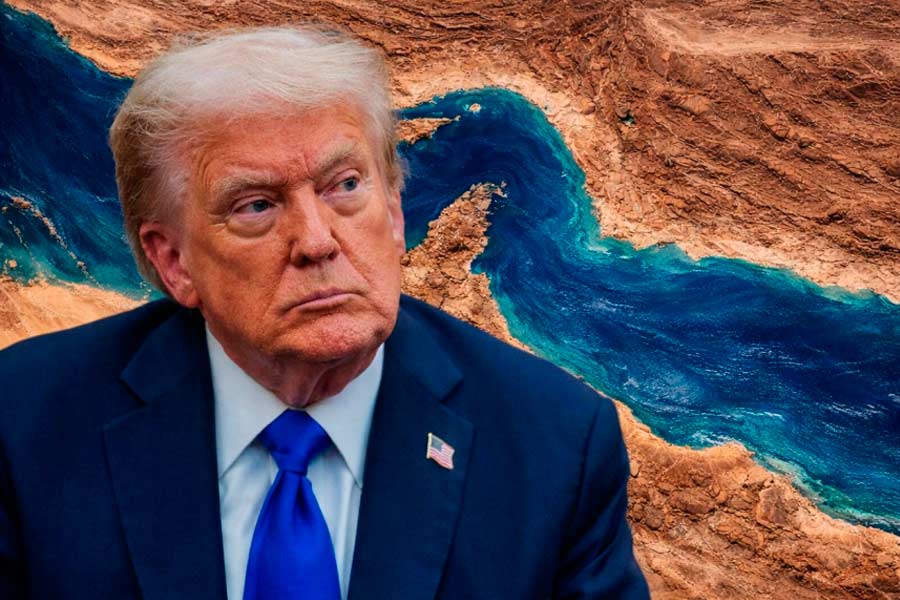
But the most significant blow has been the closure of the Strait of Hormuz by the Revolutionary Guard (IRGC), through which 20% of the world’s oil and a similar percentage of gas passes. The effects have been immediate. The price of a barrel of Brent crude, the most widely used benchmark, is approaching a dangerous $120, causing petrol and electricity prices to soar.
Blocked by the war from transporting oil by ship, Gulf producer nations could be forced to halt production as their storage facilities become saturated with crude. Iraq, OPEC’s second-largest producer, announced a cut of nearly 1.5 million barrels a day, half of its total output. “According to a JP Morgan report quoted by Bloomberg, the country has storage capacity for just six days’ production, and Kuwait for 14. The United Arab Emirates could stretch production to 19 days (by redirecting oil via pipelines) and Saudi Arabia to 65 days”[1].
The situation has changed completely, and alarm bells are already ringing in the major centres of capitalis, to the extent that an imminent G7 meeting is being prepared to discuss how to release oil from strategic reserves and ease the pressure.
The conflict is taking a heavy toll on maritime transport. The world’s largest container shipping and logistics firm, Maersk, has announced the “temporary” closure of routes connecting the Middle East with Europe and the Far East, logically threatening a disruption of supplies that could severely affect global industry. Some 3,200 vessels are stranded in the area, according to the British firm Clarkson, which specialises in maritime transport data.
“Whatever happens, the United States will guarantee the FREE FLOW OF ENERGY to the WORLD,” Trump posted on social media, offering military protection and new, cheaper insurance contracts. But the response was immediate: “These are just words for now, so we need to see how it plays out,” a spokesperson for the energy operator at CIBC Private Wealth told Bloomberg. “What form do these military escorts take? How much does the insurance cost? Do carriers feel comfortable with what is being offered to them?”[2].
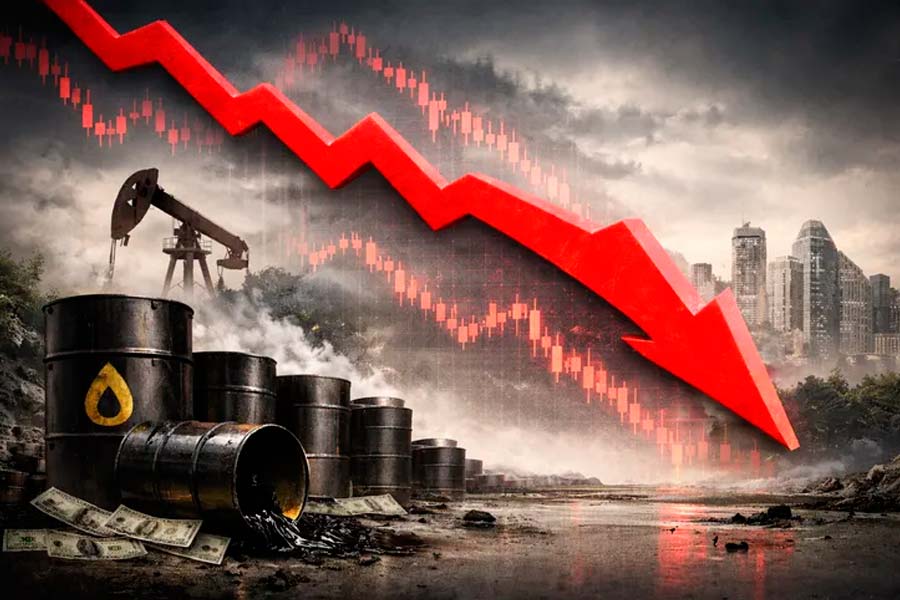
So far in the conflict, more than 40,000 flights have been cancelled, and the lucrative tourism industry at luxury resorts in the Persian Gulf has ground to a halt, but it is the widespread fall in stock markets that best reflects these bleak prospects.
Spain’s Ibex 35 saw €80.8 billion evaporate in the two trading sessions following the start of the war. Other stock markets around the world are experiencing similar situations. The average fall in share prices in developed countries has ranged varied between 2% and 4%, but could rise much further. On Friday 6 March, the S&P 500 fell by 1.3% and the Dow Jones closed with a loss of approximately 450 points. On Monday 9 March, Japan’s Nikkei 225 index ended the day down 5.2%, and in South Korea, the Kospi index fell by 6%, having already dropped by 12% in the first three days of the war.
Many analysts are warning that a persistent energy shock could also burst the tech bubble, wiping out billions of dollars in stock market speculation centred on artificial intelligence.
The signs in the financial sector are far from positive: “Corporate and bank bond placements planned in Europe and the United States have been suspended until further notice. (…) Some of the financial sources consulted believe the situation is unpredictable and that there is scope for further deterioration if the situation drags on. Not surprisingly, the European market was expecting placements of between €25 billion and €50 billion this week, according to Bloomberg forecasts. No one knows where the key is or who has it”[3].
The turbulence in the global economy has only just begun to surface, but the worst is yet to come. Energy inflation will lead to a rise in production costs, as happened with the Ukrainian conflict, exacerbating recessionary trends in Europe and worldwide, and increasing the likelihood of mass redundancies. Capitalist governments committed to intervention may face major social protests, and a scenario that completely challenges their subservience to Trump.
The situation in Iran
Trump has repeatedly stated in recent days that he will only accept Tehran’s unconditional surrender, flatly refusing to accept any option other than the overthrow of the Mullahs’ regime. But he has not achieved what he wanted.
To demonstrate their resistance to Trump’s manoeuvres, senior Iranian leaders have decided to elect Mojtaba Khamenei, son of the former Ayatollah killed by Israeli bombing on the first day of the war, as Supreme Leader. It does not appear that what happened in Venezuela can be repeated, at least in the short term. Donald Trump, who had claimed that any supreme leader “will not last long” without his approval, has been given a reality check: the hard core of fundamentalism remains in command.
There is no doubt that the Islamic fundamentalist regime has seen its social base eroded over the last 15 years. The economic crisis, the gulf between the masses and the outrageous privileges of the bourgeoisie and the clerical, military and state bureaucracy that dominate the country, the impoverishment of ever-wider sections of the population, social cuts, and political and religious oppression against the working class and youth—and particularly against women, the LGBTQ+ community and national minorities—have sparked at least four major revolutionary uprisings in the last decade. All were brutally crushed.
The latest took place this very month of January and ended, as the Iranian anti-imperialist left has denounced, with tens of thousands of people imprisoned and more than 10,000 killed, mowed down by machine-gun fire from the army, the Revolutionary Guards and the fundamentalist Basij paramilitary militias.
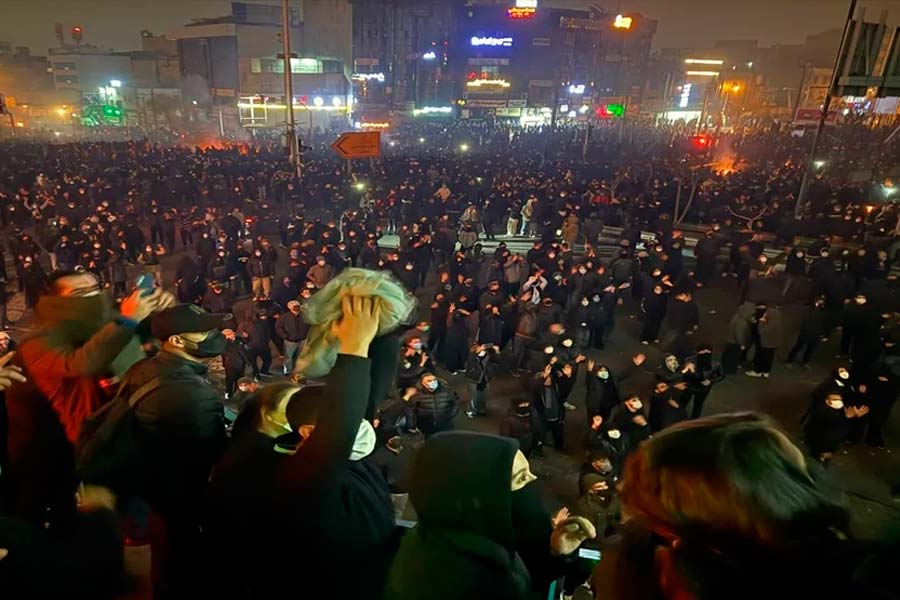
This has left an indelible mark of anger and rage. But the death and destruction caused by Trump and Netanyahu’s bombs, with attacks such as the one that killed over 100 girls in a school in the south, coupled with the reactionary, servile and degenerate nature of the Iranian bourgeois opposition in Washington’s pay, with that heir to the Shah encouraging the aggression and queuing up to receive his share of the spoils whilst his people are being massacred, far from encouraging a popular uprising, is fuelling the opposite.
Since the start of the war, there have been major demonstrations against the US and Israel in Iran itself and in other countries with significant Shia populations, such as Iraq or Pakistan, or even where this religious minority is in the majority, such as Bahrain.
If the mullahs’ theocratic and reactionary regime has been able to withstand uprisings such as that of 2022, which began following the brutal murder of the Kurdish woman Mahsa Amini by the ‘morality police’, or the more recent one in January 2026 against social cuts, it is because the mass movement failed to find a revolutionary leadership capable of unifying all its demands under a socialist programme for victory. In these circumstances, and despite the heroism shown by militants of the militant Iranian left, by thousands of workers’ and youth activists, the regime’s shock troops managed to quell the rebellion through savage repression.
The Revolutionary Guard represents a decisive sector of the ruling class which, according to various analysts, may control up to 40% of the economy and more than 1,000 companies, including the military-industrial complex, construction, energy and the technology sector. Although it has suffered constant blows from Washington, with the execution of its top leaders, it maintains a significant degree of cohesion thanks to the tens of thousands of people who depend on this economic and military power for their livelihoods.
This sector of the state apparatus is the one that has most strongly insisted on rejecting US demands and strengthening ties with China and Russia. A new Washington-puppet regime would have to undertake a purge of the Revolutionary Guard and the Basij, including the physical elimination of many of their leading cadres, and proceed with a significant privatisation and reduction of their economic influence. This prospect gives hundreds of thousands of professional soldiers, militiamen and their families a reason to resist and fight.
Iran is not Syria or Venezuela, nor even the Iraq that the US invaded in 2003. We are talking about a country with 92 million inhabitants, which is more than three times the population of Iraq at the time of the invasion and three times its land area. Attempting to dominate Iraq ended in catastrophe for the US, but it would be child’s play compared to the problems US troops would face if they set foot on Iranian soil. That is why the imperialist and Zionist strategy involves attempting to decapitate and force the regime to surrender, or to open a breach within it through increasingly destructive bombings.
Many analysts, including representatives of US imperialism itself, have voiced doubts that bombs and missiles will be sufficient to force a regime change in Tehran. Iran is not only a densely populated and vast country; it is a regional power with a far more diversified economy and industrial, technological and military capabilities far superior to previous US targets such as Syria, Lebanon or Venezuela.
One proof it’s its ability to manufacture drones of a quality, at a price and in a quantity that is proving key to withstanding these early days and even putting the attacking armies in difficulty, whose military equipment is more expensive and harder to replace with the same speed.
Of course, one should not accept all the information appearing in the media, which is heavily influenced by war propaganda. However, some reports, quoting Western sources, present data that is worrying for the US and its allies. For example, those indicating that Tehran has managed to stabilise its production at over 100 missiles per month, whilst Western assembly lines barely manage to deliver between six and seven interceptors in the same timeframe.
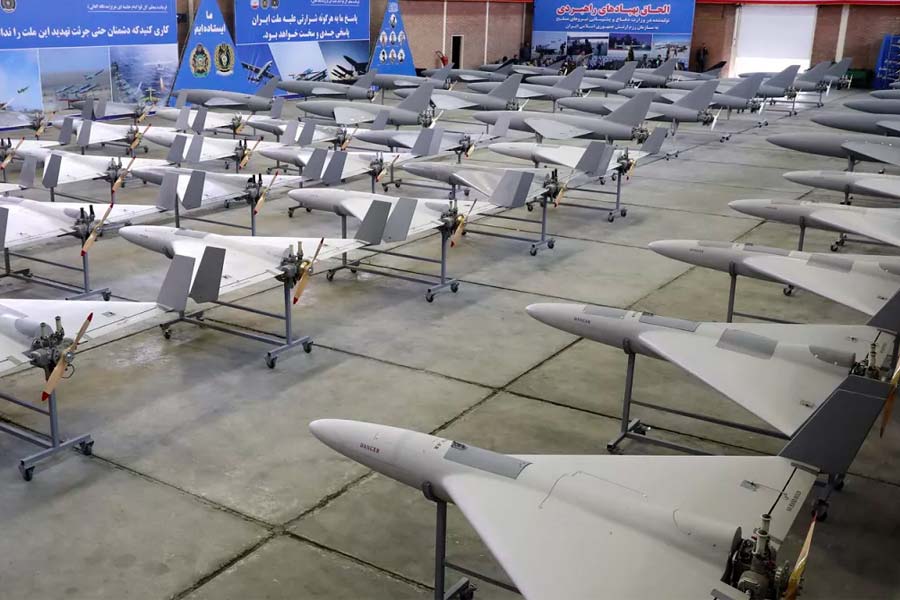
“This production gap is alarming for military logistics (…) arsenals are being depleted at a rate that Western factories cannot match. The Iranian arsenal includes Fattah-series hypersonic missiles, with theoretical speeds of Mach 15, and Shahed drones with a range of 2,500 kilometres (…) The most worrying aspect for NATO planning, according to reports from the Institute for the Study of War, is that the Iranian regime is using obsolete equipment to force the expenditure of valuable Western interceptors, reserving its technological gems, such as the Fattah-2, for a more advanced phase of the conflict or a prolonged direct confrontation”[4].
The truth is that Trump has had to meet with the major US arms manufacturers to demand a concerted effort from them to meet the military’s demand. Following the summit, attended by the CEOs of BAE Systems, Boeing, Honeywell Aerospace, L3Harris Missile Solutions, Lockheed Martin, Northrop Grumman and Raytheon, the president stated that an agreement had been reached to quadruple the production of “top-tier weaponry”.
These claims should be taken with a pinch of salt. Firstly, the US remains bogged down in Ukraine, propping up Zelensky’s air defences, and may have to do so for much longer. Secondly, because Iranian weaponry is causing far more headaches than anticipated.
Western media have confirmed that the Iranian Army has destroyed the radars of four THAAD (Terminal High Altitude Area Defence) air defence systems in several attacks on US bases in Iraq, Saudi Arabia, Jordan and the United Arab Emirates. They are also demonstrating that they can exert pressure in areas vital to Washington’s allies, attacking a desalination plant in Bahrain with drones – facilities that are essential for the water supply of Gulf populations.
Another key factor is the logistical and military support provided by China and Russia, supplying information on the location of US and Zionist targets, and advanced missiles which, as early as June 2025, caused serious problems for the US and Israel.
The role of China and Russia
The actions of Russian and Chinese imperialism in letting the Assad regime in Syria fall, employing diplomatic rhetoric in the face of the genocide of the Palestinian people whilst strengthening their thriving trade relations with Tel Aviv, or their abandonment of Venezuela following Maduro’s abduction, show that, above and beyond demagogic declarations in favour of the ‘freedom of peoples’, the benefits of multilateralism, and the so-called “Axis of Resistance”, the interests of the major capitalist monopolies in both countries are paramount.
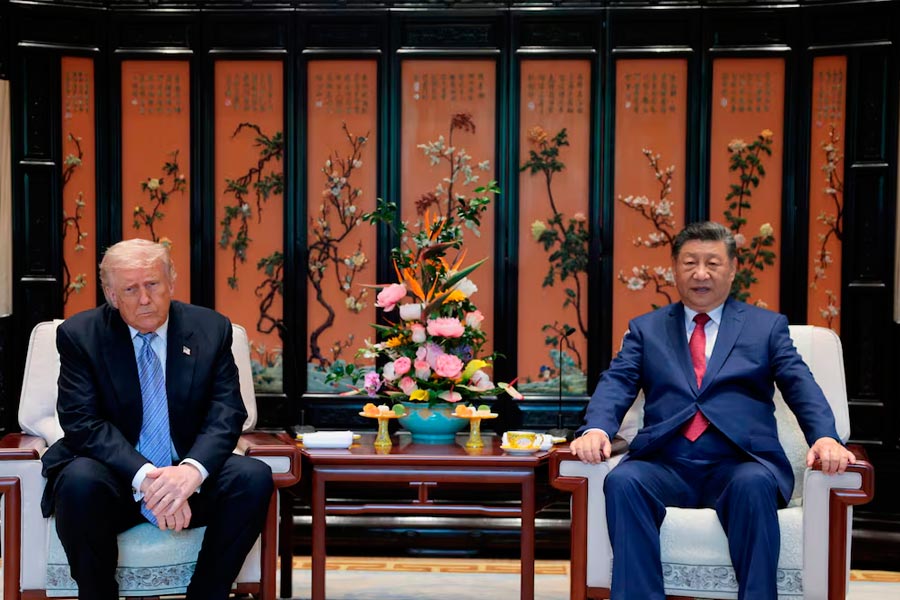
It is clear that Beijing and Moscow are retreating to areas of influence they consider more vital in the short term, such as consolidating Russia’s military victory in Ukraine, or gaining dominance over the Indo-Pacific, whilst China is diversifying its investments (towards India, Brazil…) in the confidence that their superiority in the productive, technological and commercial spheres will guarantee them a dominant position in the medium and long term.
But without a doubt, Iran represents a point of vital importance for both powers vis-à-vis the US. And not only because China obtains 15% of the crude oil it imports from Tehran and has signed investment deals worth billions of euros in Iran as part of its New Silk Road Project. There is also a political factor of the first order: if its main ally in the Middle East is defeated and a US-controlled government is imposed, its prestige and authority will be far more called into question, and its role as a counterweight to the Western bloc far more challenged.
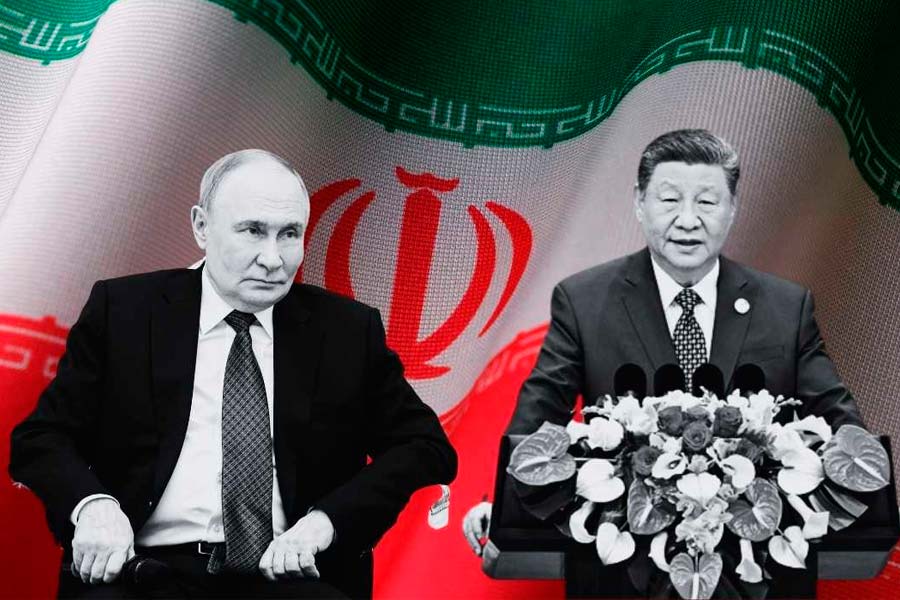
This does not mean they will confront Washington and Tel Aviv in open warfare, but it is clear they are providing logistical and intelligence support to prevent the collapse of the Iranian regime. This is a factor to bear in mind, given that Tehran’s resistance could be prolonged, seriously complicating Trump and Netanyahu’s military campaign.
War is always the most complicated equation, and at present it is impossible to draw a definitive conclusion. The possibility that the brutal offensive currently being unleashed on Iran could escalate to a scale similar to that in Gaza, and that this might ultimately create a breach within the regime and force its surrender, cannot be ruled out. Obviously, such a scenario—bringing the mullahs to their knees, let alone clearly forcing a regime change—would allow Trump to press ahead with his offensive both outside and within the US. But it is far too early to think that this is the only possibility. The scenario remains wide open.
Down with imperialist war! No more blood for oil!
Imperialist war puts all organisations and political tendencies to the test and strips away all pretences. The UN and the Western powers, starting with the EU, have expressed their support for the intervention, as was to be expected.
Ursula von der Leyen, President of the European Commission, took less than 24 hours to call for “a credible transition in Iran” and to roundly condemn Tehran’s response to the brutal bombings by Washington and Tel Aviv, describing it as “unacceptable and unjustified”. The thousands of dead and the hundreds of thousands of wounded and displaced caused by the US and Zionist bombings are perfectly acceptable and fully justified in the eyes of this cynical representative of the big European banks and multinationals. “Collateral damage” necessary for the European bourgeoisie to be invited to share in the spoils.
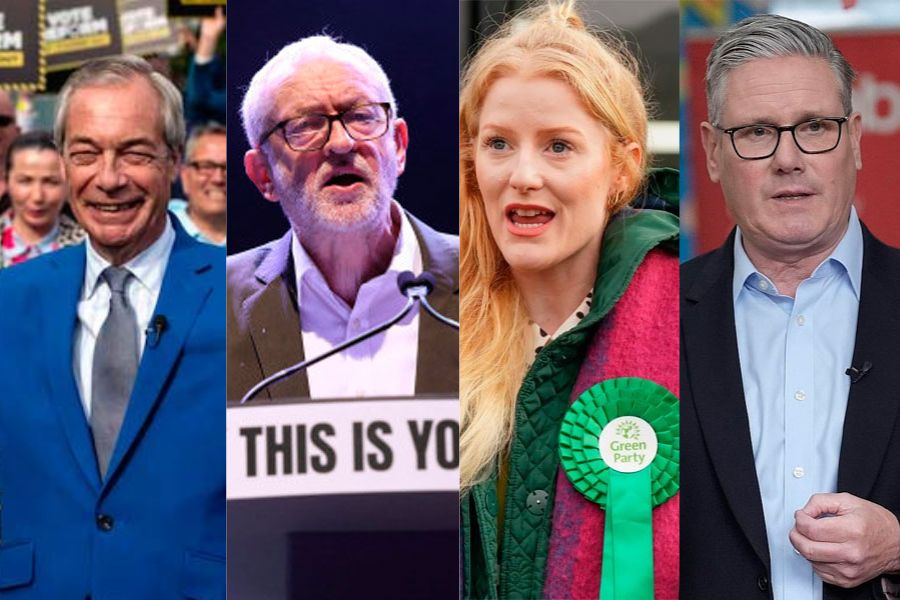
But if anyone takes the cake in displaying their grovelling, reactionary and criminal nature, it is the global right and far-right. In the UK, Reform UK and the Tory Party, and in Spanish state, with PP and Vox.
The patriots flag have demanded that Pedro Sánchez’s government unconditionally submit to Trump’s demands and participate in the war, making it clear that if they were in the Moncloa, they would replicate, point by point, the imperialist actions of the Aznar government and how little they care about the death and destruction caused by that intervention in Iraq and in Spain, where we suffered the brutal jihadist attacks that claimed the lives of 192 people and left more than 2,000 injured on 11 March 2004.
The memory of those events, of the mass mobilisation that took place in Spain against that war denouncing the farce of ‘weapons of mass destruction’, and what we have experienced with the mass movement against Zionist genocide, explains the position adopted by the Spanish government and particularly by Pedro Sánchez.
The leader of the PSOE has broken with the script by standing up to Trump in his words, denouncing the “illegality” of his intervention against Iran, and calling to “Stop the War”. On the day he responded to the US president’s threats from the Moncloa Palace with these words, millions of workers and young people were filled with hope and confidence. It was a direct message that laid bare the right wing and its servile politics and projected the image of Sánchez across the world as an opponent who says what European “leaders” dare not say.
And although we know that words are important, what truly matters, as experience teaches us, are deeds. If the war is thoroughly reactionary and imperialist, it is because Trump defends the interests of the big oil corporations, the military-industrial complex, US banks and investment funds, and those of the whole world. And the US, to protect global big capital, has an armed wing in the form of NATO, of which the Spanish state is a part.
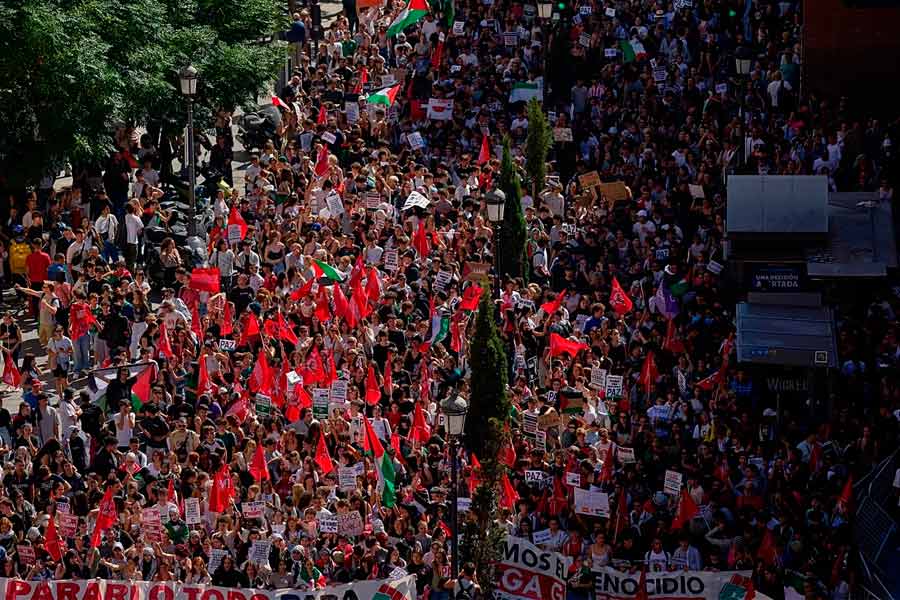
Fighting against imperialist war whilst advocating for continued membership of NATO and the maintenance of US military bases is a contradiction in terms. As is sending frigates to Cyprus to intervene in the war, even if for so-called ‘defensive’ purposes. This is the problem, the very same problem that surfaced when the Sánchez government denounced the Zionist genocide yet maintained commercial, military and diplomatic relations with Israel, or when it publicly “rejects” the 5% of GDP spent on rearmament demanded by NATO, yet the defence budgets approved for 2025 are the highest in history.
Half-measures are useless. If the PSOE-Sumar government does not want to be implicated in this imperialist war, it must leave NATO now, close the US bases and put into practice promises such as that comprehensive arms embargo on Israel, which was never implemented. For these reasons, the crucial thing in this battle is to build a massive mobilisation of workers and young people against this new war.
We at Izquierda Revolucionaria say it loud and clear: No more blood for oil! Not a single euro, not a single soldier, not a single bullet for this war! The leaderships of CCOO and UGT, just like the European trade unions, must stop looking the other way; they must abandon the strategy of social peace in favour of the capitalists in the face of events that directly concern them. It is the impoverishment of the working class that is at stake, it is inflation eating away at our wages, it is the thousands of redundancies that may occur in the coming months!
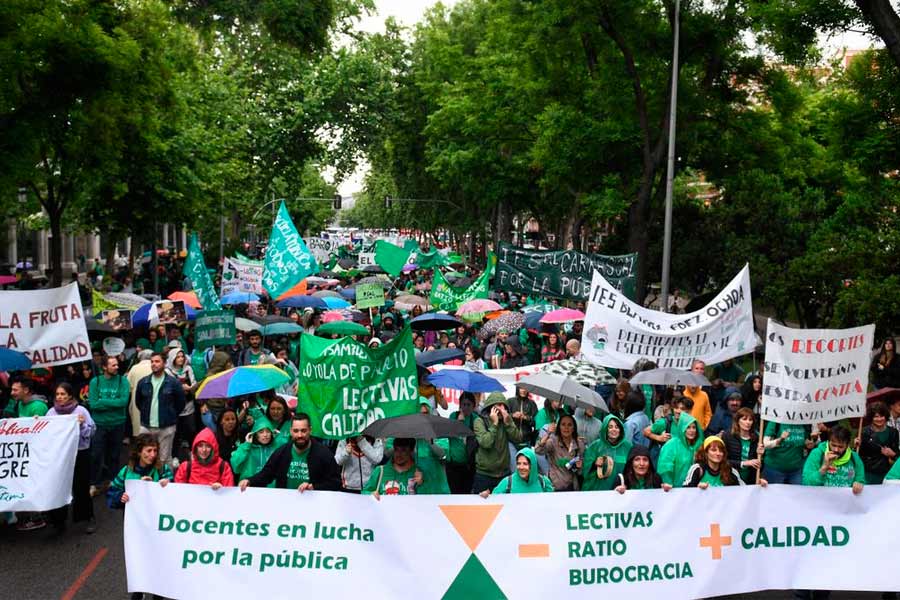
That is why we must react forcefully; we must call for mass mobilisations, not to demand compliance with a non-existent and fraudulent international law, but to force the imperialists to cease their aggression. And this means extending and broadening the struggle in the streets, promoting and organising the widest possible demonstrations and protests leading to a general strike to defeat the warmongering plans.
We revolutionary communists are not neutral. A victory for Trump and Netanyahu would not only mean the subjugation of the Iranian people and the deaths of tens or even hundreds of thousands of innocent people; it would fuel new and even more virulent wars and strengthen the advance of the neo-fascist far right.
The defeat of these two war criminals would deal a crushing blow to imperialism and Zionism, and to the right and far right across the world.
A communist policy in support of the Iranian people, the Palestinian people, and all peoples crushed by imperialism and its servile bourgeoisie, has nothing to do with supporting the reactionary and theocratic regime of the mullahs. That is why we say that the task of overthrowing the Iranian bourgeoisie and capitalism, along with the fundamentalist and repressive state, and establishing a socialist Iran can only be achieved by the working class through direct action, the general strike and insurrection, guided by a revolutionary and internationalist programme.
Down with imperialist war!
If you want peace, fight for socialism!
For a socialist Iran and a socialist Federation of the Middle East!