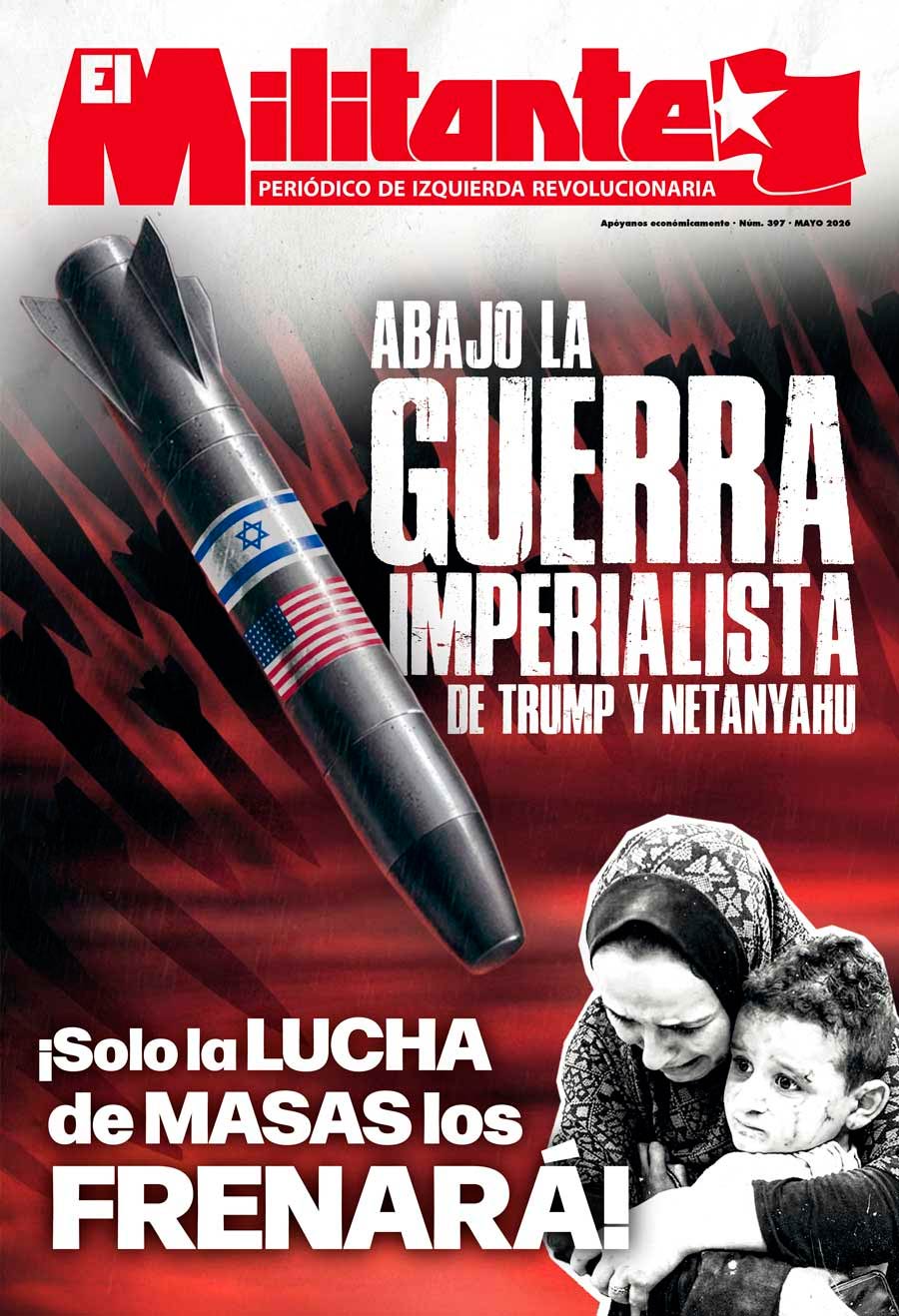





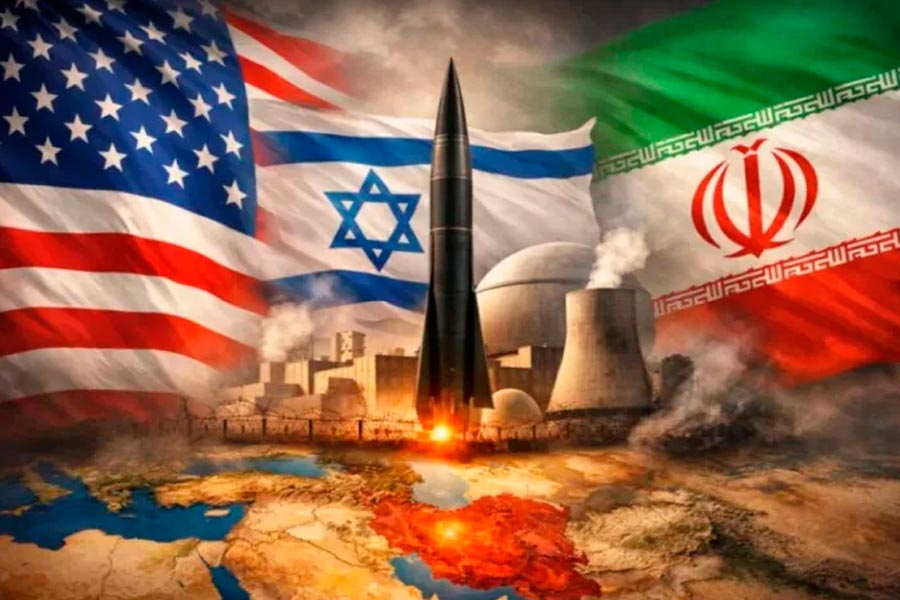
Trump's erratic strategy, after realizing that the assassination of dozens of high-ranking Iranian officials has not brought down the regime, as Tehran's fierce resistance with hundreds of missiles fired at Israel, the Gulf monarchies, and the Strait of Hormuz, has set off alarm bells for Western imperialism. With the war entering its most uncertain phase, the chances are increasing that it will backfire on Washington and trigger a global economic crisis with catastrophic consequences.
After a month of bloody and criminal bombings that have caused thousands of deaths, tens of thousands of wounded, and more than a million displaced people, the US has not achieved its objectives. The ayatollahs' regime has not fallen, and there are no signs of an internal rebellion. Of course, the war has two fronts, and in the case of Lebanon, Zionist troops have indeed caused exceptional damage, destroyed Beirut and occupying the south of the country. The plans of Netanyahu and his cohort of neo-Nazi supremacists to impose the Greater Israel project by force have taken a step forward after the holocaust inflicted on the Palestinian people in Gaza.
As we explained in our previous statement, the devastation of Gaza and the loss of hundreds of thousands of innocent lives became a definitive test for the far-right forces governing the US and Israel, and for the sectors of the imperialist bourgeoisie that support them. After gaining the acceptance of their sham “peace plan” from allies and adversaries (Russia and China among others) and achieving other victories such as seizing control of Syria and Venezuela, Trump and Netanyahu are drunk with success. Nothing and no one could stop them, they thought. And so they decided to launch this savage military offensive, convinced that the result would be a military parade and the collapse or surrender of Tehran within days. Nothing could be further from the truth!
Boomerang effect
The Iranian resistance, with clear military, technological, logistical, and financial support from China and Russia, is turning this war into an ordeal for US imperialism and Donald Trump. They intended to further escalate their militarism, reaffirming their imperial power over the Middle East and globally, diverting attention from the profound internal crisis shaking American society, and reversing the increasingly pronounced decline of the US as a hegemonic power in the face of China, sending the world a message of invincibility.
But the result has been the opposite. What they have achieved is to set the Middle East aflame, pushing their Persian Gulf allies to a critical situation they could not have imagined a month ago, and to the brink of economic recession. The war is making the decline of American imperialism and the limits of its power even more evident, widening the trust gap with key allies such as the European Union, Japan, Australia, and South Korea to unprecedented levels. These allies had already suffered from the US trade war and an increasingly aggressive foreign policy.
From being the enforcer of global capitalist order, Washington has become the primary source of crisis, chaos, and instability. The biggest beneficiary of this increasingly desperate militaristic escalation, particularly after its foray into the Iranian wasp nest, is precisely the bloc formed by Chinese and Russian imperialists. Washington's rivals in the struggle for supremacy continue to avoid direct confrontation but have decided to give their Iranian ally the support that, as cynically as it was calculated, they denied to the Palestinian people and other allies they deemed expendable, such as the regimes of Assad in Syria and Maduro in Venezuela.
And the reason for this is clear. Iran represents its main military, geopolitical, and economic foothold in a key region like the Middle East. Its loss would be a far more traumatic blow to its prestige, and to strategic investments and projects.
US imperialism at a crossroads
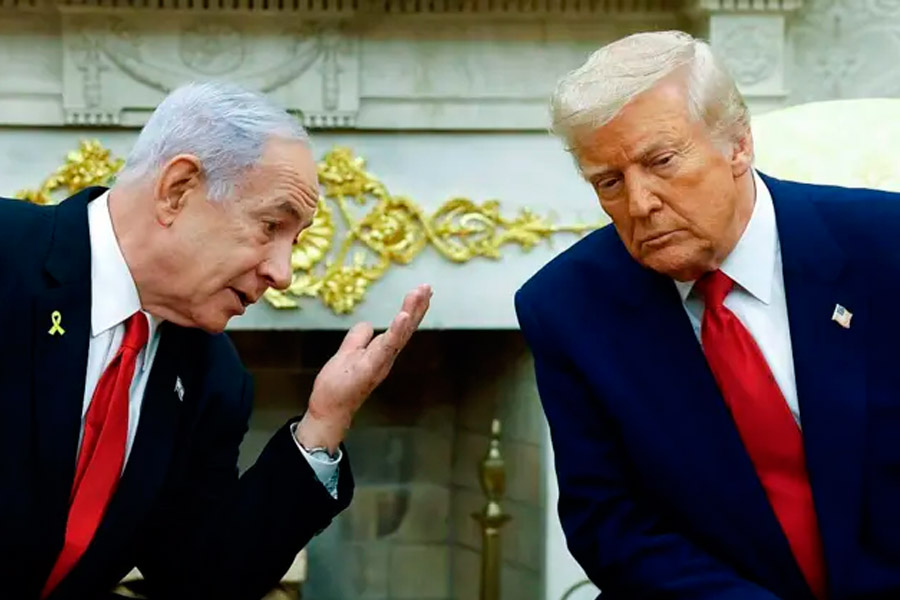
As we write these lines, the prospects for the development of the war remain very open. On the night of Saturday, March 21, Trump issued a 48-hour ultimatum, promising to destroy all Iranian power plants if the regime did not give in. Before that time had elapsed, on the morning of Monday the 23rd, he was forced to back down, granting another five days to “allow time for negotiations.” On Friday the 27th, he announced an extension of the deadline to April 6.
What explains this setback? That their threat to escalate the war even further was immediately met by the Tehran government warning that they would retaliate blow for blow, as they have done so far after each aggression, declaring Israel's power plants and other critical infrastructure, and the oil wells, refineries, desalination plants and production centres of the Gulf monarchies allied with Washington, as military targets.

There was another significant factor as well. Trump's ultimatum sent oil prices soaring to a new record of nearly $120 a barrel and pushed US Treasury bonds to the same levels as in April 2025, when, after threatening China with 100% tariffs, the US president had to back down.
Faced with the evidence that the plan for a quick and decisive victory has been shattered, nervousness, doubts, and divisions within the imperialist camp have only increased.
Critical voices have multiplied within the MAGA camp following the high-profile resignation of Trump-aligned Joe Kent, the National Counterterrorism Director. Also, the pressure from European allies has increased, including Starmer's government, Macron in France and Pedro Sanchez public opposition. And of course, from Gulf monarchies too as they witness how their key economic infrastructures are being destroyed while the military protection that Washington used to provide has shown to be meager.
In addition, the possibility of a recession with fierce consequences for the class struggle, is influencing Washington's plans. This explains why Trump seems so desperate to reach an agreement, claiming that they have destroyed Iran’s economy and military apparatus—which is a complete lie— while he rants with one contradictory statement after another to no one's surprise.
“As expected, the United States (unable to learn from history) has once again discovered that overwhelming air power has a very weak relationship with the political collapse of an adversary. There is no easy regime change or capitulation scenario, no Venezuela 2.0 in sight,” explained former Zionist negotiator David Levy [1]. Another analyst, a former advisor to Obama and also to Republican leaders, observed that “given these circumstances, the wisest course for the United States might be to accept a limited loss now, rather than risk further losses later”[2].
But this is not the only possibility in such an uncertain time. War generates its own dynamic. Resorting to military power to mask its economic and geopolitical decline has pushed US imperialism and Trump to launch the attack, and now, without a clear victory, the temptation to raise the stakes and defend its wounded prestige could plunge it into an even greater conflict. This happened to them in Iraq and in Afghanistan, with disastrous results that encouraged the advance of China and Russia.
Analyses that attempt to explain this critical juncture by claiming that Netanyahu is dragging Trump along, are highly one-sided and therefore flawed. That Netanyahu has a defined agenda in the Middle East, and that this war is in his interest, is obvious. But the political and military objectives of Zionism are also those of Trump and the American ruling class. They have demonstrated this through their support for genocide, the colonial plan to rebuild Gaza and transform it into a luxury resort, their backing of the annexation of the West Bank and southern Lebanon, and their joint operations in Syria. And it must be reiterated that, without ongoing US funding, Israel would be unable to sustain its economy and its military might.
Zionism is the shock troops of US imperialism in an area where key aspects of global geopolitics are decided. This is the underlying reason for a unity of action that has been maintained, and strengthened, since the founding of the Zionist state in 1948. In every regional war, in the ethnic cleansing against the Palestinian people, in the counterrevolutionary plans to crush popular uprisings and social revolutions in the Arab world, Zionism has been an exceptional ally. There is no confusion or naiveté on the part of any of the main players in Washington and Tel Aviv, but rather a calculated division of roles.
The revolutionary communists and the Iranian regime
If this month of war has made anything clear, it's that the Iranian regime is facing a fight for its survival and is prepared to defend itself to the bitter end. It has powerful reasons for doing so, and so far, it has also demonstrated that it possesses the military, technological, and human resources to resist.
As revolutionary communists, we have made clear our complete opposition to the theocratic and reactionary regime of the ayatollahs, to the bourgeoisie that brought them to power by crushing the socialist revolution of 1979, and to a whole system of exploitation and repression that has drowned the workers' movement in blood for decades, that has fought the communist left by murdering and imprisoning thousands of militants, that has repressed the democratic rights of all national minorities, and that has subjected women and the LGBTI community to a state of terror and ruthless persecution.
The nature of this fundamentalist dictatorship has been revealed in brutal welfare cuts, widespread impoverishment, and the massacre perpetrated by the Islamic Revolutionary Guard Corps and the Basij militia against the mass uprising of January of this year. But the liberation of the Iranian people, the working class, and women will never come through imperialist and Zionist bombing. In fact, this aggression, far from inciting any “revolution,” has clearly exposed the imperialist interests of Washington and Tel Aviv in seizing control of the resources of a sovereign country and imposing a puppet government under the leadership of Shah Reza Pahlavi.
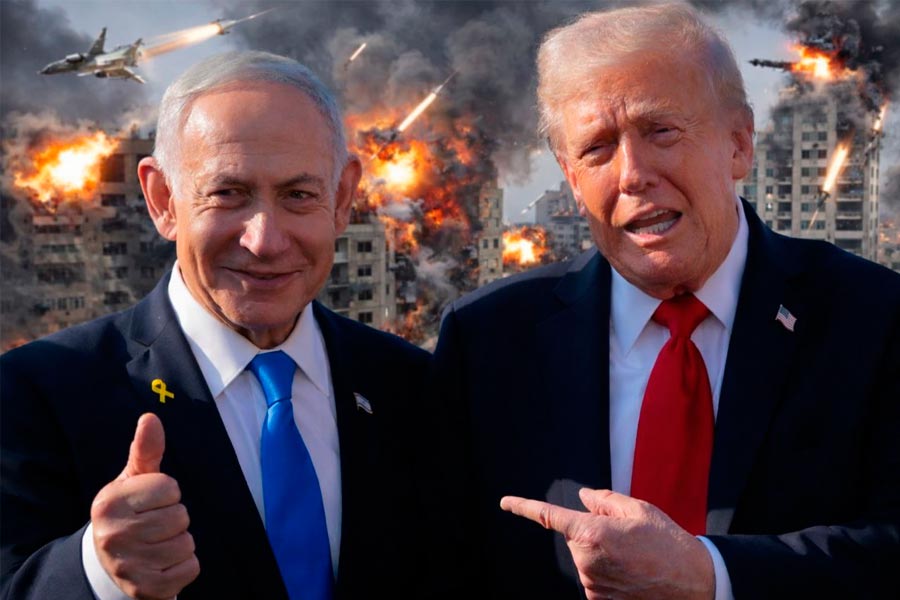
Having said that, we also clearly state that we, revolutionary communists, are not neutral in the face of this imperialist aggression. A victory for Trump and Netanyahu would not only mean the subjugation of the Iranian people and the deaths of tens or even hundreds of thousands of innocent people, but it would also fuel new and more virulent conflicts. The defeat of these two war criminals would be a devastating blow to imperialism and its Zionist allies, and consequently, to the global neo-fascist far right.
A communist policy in favour of the Iranian people, the Palestinian people, and all peoples crushed by imperialism and its puppet bourgeoisies, has nothing to do with supporting the reactionary and theocratic regime of the ayatollahs. That is why we say that the task of ending the Iranian bourgeoisie and capitalism, the fundamentalist and repressive state, and achieving a socialist Iran can only be accomplished by the working class through direct action, general strikes, and insurrection with a revolutionary and internationalist program.
War is the most complicated equation
Trump's 15-point plan to end the war has been rejected by spokespeople for the Iranian regime, who have rightly denounced it as a senseless provocation, especially since their ability to withstand the American and Israeli attack, has been publicly demonstrated.
Added to this is the record of the last two times they sat down to negotiate: Trump used them as a distraction to buy time and launch the June 2025 offensive and the current war. Tehran has made it clear that it is not willing to be tricked a third time and that the course of the war so far does not oblige them to accept the White House's conditions.
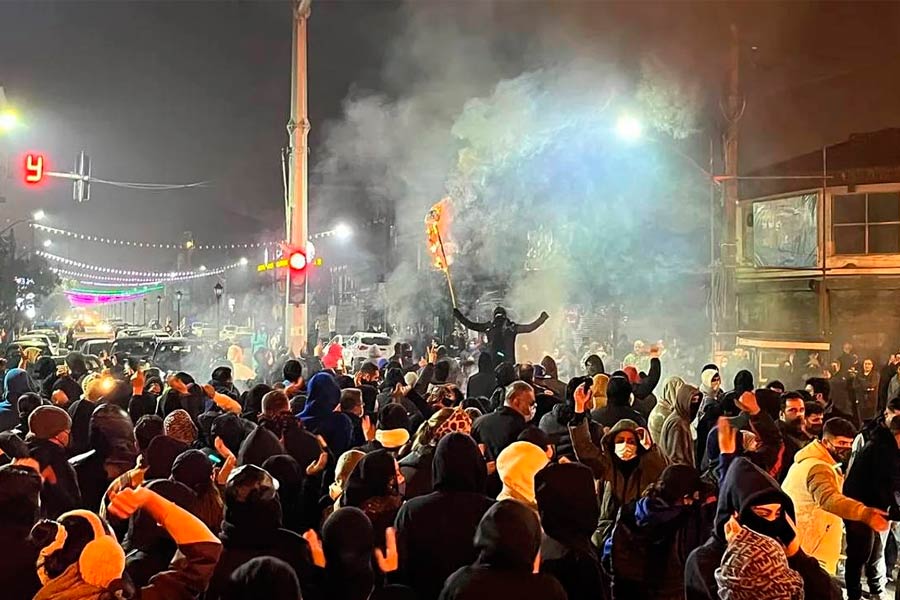
The facts are clear. While Washington offered this carrot, the bombings have continued, and another 2,000 marines and 3,000 paratroopers have been deployed to the Middle East, bringing the total number of troops stationed in the region to over 10,000.
Although plans may change drastically given Trump's international isolation, who has even threatened to leave NATO and warned Europeans to manage themselves to regain control of the Strait of Hormuz, the possible objective of this military mobilization, according to various sources, would be to occupy Kharg Island, where around 90% of Iranian oil is refined.
Meanwhile, the US has decided to bomb Iraqi army barracks to "neutralize" possible military support from Shia militias for Iran, and Israel continues to devastate Lebanon following the Gaza model.
The Zionist government has declared its intention to reach the Litani River with ground units, and Economy Minister Bezalel Smotrich, one of the most extreme Nazi-Zionists in Netanyahu's government, has openly proposed the destruction of all homes in southern Lebanon and their definitive annexation, a fundamental objective of the supremacist project of Greater Israel.
The Israeli Parliament has also taken its genocidal policy a step further by approving the death penalty for Palestinians who kill Israelis, while preventing reciprocity. In other words, settlers in the West Bank and Zionist soldiers in Gaza can murder Palestinian civilians with impunity, while more than 10,000 Palestinians languish in prisons and face potential death sentences. Zionist ministers and members of parliament applauded this measure enthusiastically, showing off pins with the image of a gallows.
But the ongoing war is causing serious military and economic strain. Iranian drones and missiles, which strike major cities daily, causing significant damage and dozens of casualties, are generating considerable anxiety among the population, exposing the lies of Netanyahu's government regarding the supposed invulnerability of the Iron Dome.
Thus, the Zionist Chief of Staff warned of the risk of the troops "collapse in on itself”[3] due to maintaining so many open fronts. In conclusion, he demanded an expansion of recruitment and the immediate incorporation of 20,000 new soldiers into the IDF, which could provoke desertions and internal opposition. Since the beginning of the genocide in Gaza, more than 100,000 young men have refused to be drafted.
If Israel had to withdraw from Lebanon in 2000, after 22 years of occupation, it was precisely because of the military, economic, and social drain this caused and the internal rejection. Despite the harsh repression and the prohibition of protests against the war, demonstrations took place in various Israeli cities on March 28, reflecting this growing discontent. This represents a crack in a society that has shifted significantly to the far right, but it also offers a glimpse that not everything is running smoothly for the fascists who sit in the Government and the Knesset.
Gloomy prospects for Washington
If they continue down this path, the US and Israel could face a nightmare scenario. So far, they have crossed one red line after another in this war. Although they pledged to their allies not to bomb oil and gas facilities, Israel attacked Iran's main extraction centre (South Pars), once again sending gas and oil prices and sowing panic in the markets. They haven't even hesitated to launch attacks on nuclear facilities, which could unleash a true catastrophe.
But each time they have escalated the conflict, they have been met with a measured yet forceful and immediate response. The attack on Sur Fars was met within minutes by paralyzing Ras Laffam in Qatar, the world's largest gas hub, which produces 20% of the world's liquefied natural gas. This attack was part of a coordinated offensive using drones and missiles that, in a single night, struck several Israeli cities, as well as refineries and oil wells in various locations in Qatar, Saudi Arabia, and the United Arab Emirates. The attacks against Iran's Bushehr nuclear facility were also met with deterrent strikes on Israel's Dimona nuclear facility and its surrounding area.
The precision and magnitude of the response left Trump, Netanyahu, and their military chiefs speechless, refuting their boasts that they had "totally" destroyed Iran's military capabilities and "already won the war."
Currently, dozens of media articles are speculating about plans to militarily seize Kharg Island. As some of them have pointed out, occupying this key island, located in the northern Persian Gulf 25-30 kilometers off the Iranian mainland coast, where approximately 90% of Iran's oil is currently refined, could severely cripple the economy and hasten Tehran's surrender. However, given how the war has unfolded so far, there is no guarantee that this is the only possible outcome.
Many other analysts, including former advisors to the US military itself, have considered that such an action could open a scenario with unpredictable military, political and economic consequences[4], starting with the certain death of hundreds of marines and placing the price of oil above $150 and even up to $200.
A US-Israeli offensive on Kharg could be met by Iran diverting more than 50% of its production to alternative refining centers such as Kooh Mobarak, near the city of Jask, or the islands of Lavan, Sirri, and Qeshm. Another effect of the Tehran regime's military resistance is that its aggressors have been unable to prevent Iran from increasing its oil sales and earning billions of dollars more than anticipated, benefiting from higher prices and its control of the Strait of Hormuz. This control allows the passage of tankers bound for China and other countries that do not support the war, while simultaneously blockading and attacking the Gulf monarchies allied with Washington[5].
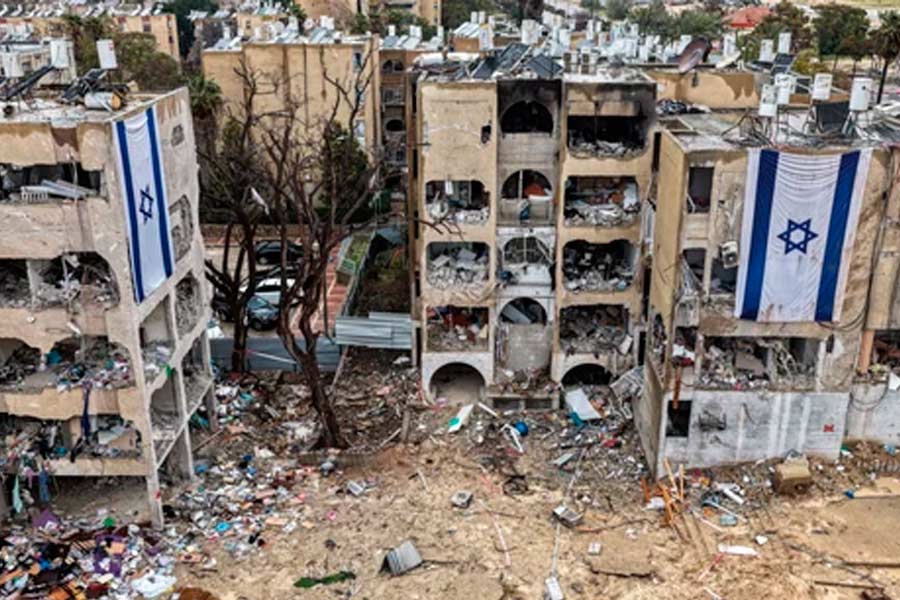
In addition to resisting on the economic front, the Iranian regime could launch a counteroffensive to retake the island, opening a new phase of land warfare that the US and Israel have tried to flee as if from the plague. This would be along with attacks on refineries and other targets belonging to US allies in the region on a scale far exceeding what has been seen so far, with the aggressor nations finding it increasingly difficult to replenish their arsenals at the pace demanded by the Iranian resistance.
Among other possible responses from Tehran is the closure of the Bab el-Mandeb Strait by the Houthis of Yemen, allies who until a few days ago had remained expectant at the request of the Iranian regime itself but who have now taken action, launching their first attacks against Israel.
Twelve percent of global trade passes through Bab el-Mandeb. Combined with the closure of Hormuz, this could deal a decisive blow to energy supplies from the Middle East, creating an even more complex scenario that would severely affect the supply of fertilizers, microchips, various minerals, food, and other essential goods.
Currently, Asian countries such as Sri Lanka, Bangladesh, Thailand, the Philippines, and others have already implemented energy rationing measures. A prolonged war could add to this group economies that play a far more decisive role in the global economy, such as Taiwan, South Korea, Japan, and even India.
Historical US allies in the Arab and Muslim world are suffering the economic effects of the war, and discontent among their populations continues to rise. In Egypt, major workers' strikes have been declared, the likes of which haven't been seen since the Arab Spring, while the Pakistani government has just signed a joint declaration with China calling for an end to the bombing of Iran and the invasion of Lebanon, and Indonesia has also approved joint military exercises with the Asian giant.
The effects of a prolonged war could curb American consumer spending and impact the world's largest economy more than anticipated, as Federal Reserve Chairman Chris Waller warned. In just three weeks, the closure of the Strait of Hormuz has become "the greatest threat to global energy security in history," according to Fatih Birol, executive director of the International Energy Agency (IEA), in comments to El País.
The impact of an energy crisis of the magnitude that is looming could be far greater than the so-called oil crisis of 1972-73, which triggered a global recession. Today, oil and gas consumption from the region is twice as high, and the interdependence and globalization of the world economy is far greater.
It's not the madness of one individual, it's the decay of the system
Every threat and contradictory statement from Trump are followed by convulsive shocks in the financial markets, sharp rises and falls in gas and oil prices, timid recoveries in the values of world stock exchanges followed by crashes that evaporate billions of dollars.
Six decades after the historic disaster of Vietnam, and two imperialist interventions in Iraq and Afghanistan, from which they also emerged humiliated, this imperialist aggression could be the beginning of the end for Trumpism.
History offers eloquent examples. The success and intoxicating arrogance of such individuals, placed at the helm of powerful nations during times of acute crisis, can become the source of colossal failures. This happened to the Napoleonic Empire in its advance against Russia, to Napoleon III in 1870 in the war against Prussia, and also to Hitler in his offensive against the USSR. After the initial euphoria, their defeat was absolute.
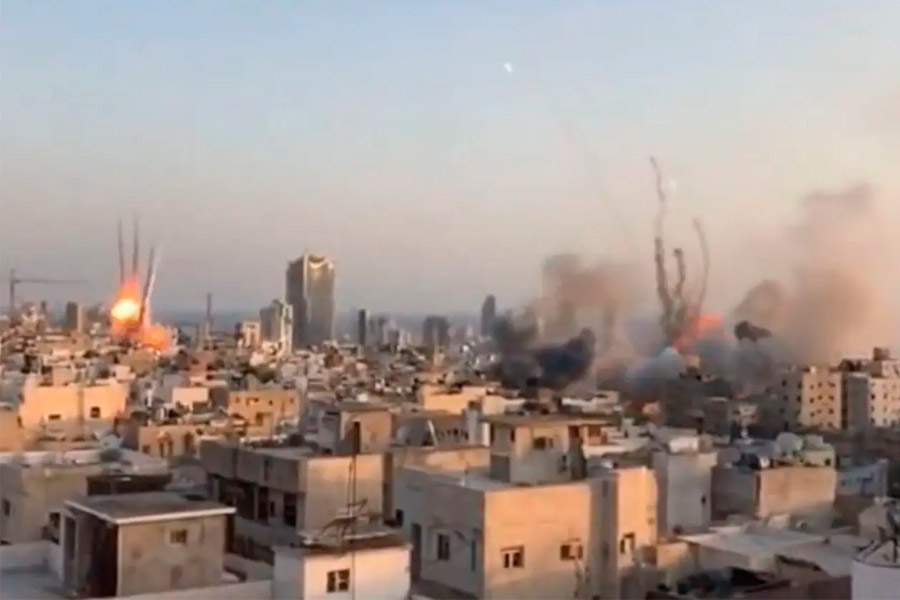
In the first month of the war, Washington spent $33.1 billion (more than $1 billion a day), with no results. Another month of war could push the total expenditure to between $70 and $90 billion. The fear that what is already a clear military failure could turn into a political defeat, and the risk of economic collapse, could force them, as we noted earlier, to withdraw. But that would further exacerbate their internal crisis and decline, and would not preclude new military adventures to try to disguise their failure, as they are already doing with the criminal blockade they maintain against Cuba.
War is the continuation of politics by other means, said the Prussian military theorist Von Clausewitz. As we have explained, and as also occurred with the military escalation launched by Hitler and German imperialism in the 1930s, this new imperialist war does not originate from the madness, whim, ignorance, or narcissism of Donald Trump.
Its driving force is that decisive sectors of the American ruling class have realized that all attempts to win the race for world supremacy by other means have failed, leaving them with only the military option.
Despite the tariff campaign, 2025 ended with China achieving a record trade surplus and the US widening its deficit for another year. All the data on scientific and technological development, the growth of its manufacturing capacity, and its control of global value chains and trade demonstrate Beijing's increasing dominance.
Trump's illusion of narrowing this gap by calling on American capitalists to invest in productive industry is shattered by the evidence that they reap far greater profits by speculating on debt and other financial products or by keeping their investments abroad. The policy of using the dollar to threaten and attack enemies and allies alike has meant that, although it remains the dominant currency for global trade, its share has fallen from over 70% to less than 60% in the last two decades, and plans and agreements between different countries to use the yuan are on the rise.
Faced with this evidence, the American bourgeoisie opted to seize control of fossil fuels, oil and gas, and use that position as a weapon to impose its conditions. But this strategy is also running into limitations. The US, despite being the world's leading producer of gas and oil, must import 40% of its crude oil. This is one of the reasons for the intervention on January the 3rd against Venezuela, and for attempting to replicate the success they achieved with the kidnapping of Maduro with a brutal offensive against Iran. But obviously, as we have pointed out, the regime of the ayatollahs is a much more difficult target to capture.
Clinging to military power like a lifeline is a strategic imperative for the American ruling class. And although the rival imperialist bloc formed by China and Russia currently prefers to wage a war of attrition by avoiding direct confrontation, the outcome of this struggle for imperialist hegemony can only be more war, barbarity, misery, and exploitation for the people.
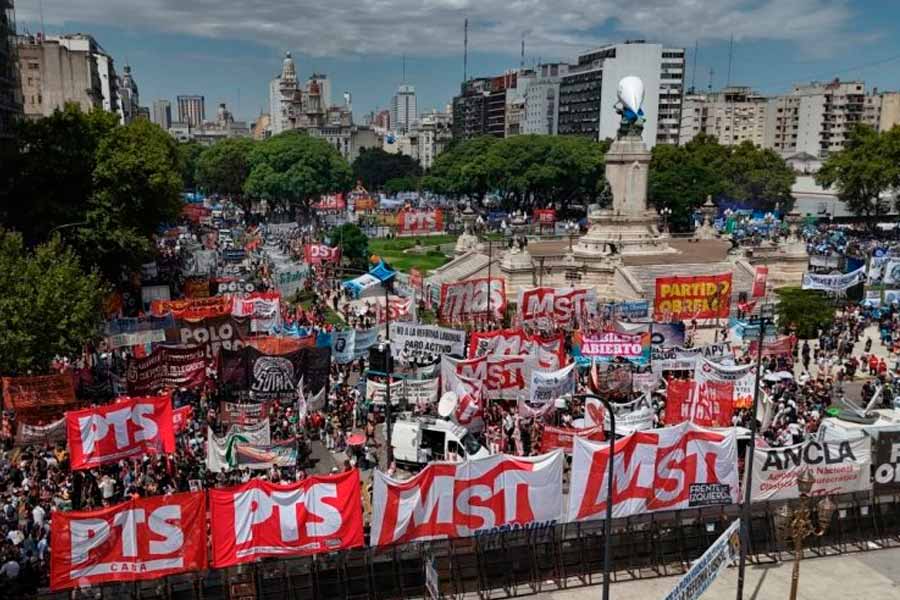
At the same time, it must be emphasized that Trump faces his most difficult challenge within the United States. The resistance against the fascist gangs of ICE, the historic Minneapolis strike, the massive No Kings Day demonstrations, and especially the gigantic mobilization of March 28th[6], show the path and the potential to end the authoritarian Trump regime and put one of the greatest machines of destruction and tyranny that humanity has ever known on the ropes.
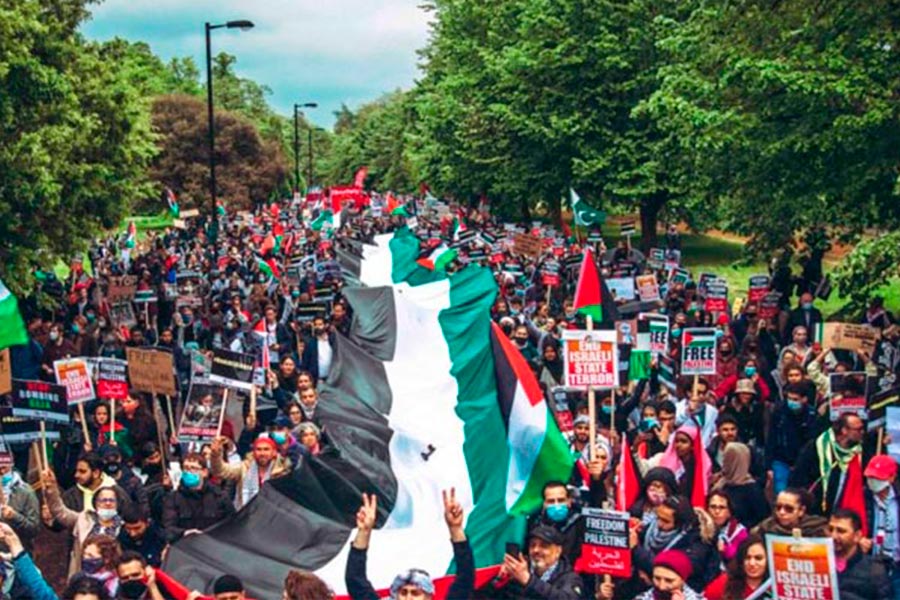
As Lenin explained, imperialism means endless horror, continuous wars between imperialist bandits to divide up the world at the expense of the rights of the people and the lives of the oppressed masses.
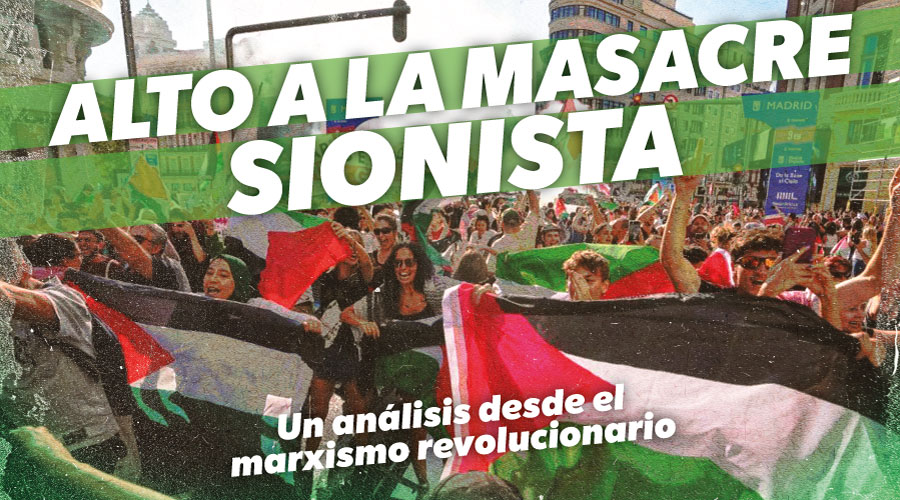
The only alternative to war and barbarism is the one demonstrated by the global rebellion against the genocide in Gaza: building a mass movement against imperialism, Zionism, and capitalism. This is the fundamental task of all of us who struggle to build a mass party with the program of revolutionary communism to end all forms of violence and oppression by carrying forward the socialist revolution.
If you want peace, fight for socialism!
Not one euro, not one soldier, not one bullet for this war!
Let's build an internationalist movement against imperialist war and for the defeat of the US and Israel!
Footnotes:
[1] Perder una guerra sin perder una batalla: qué dice el manual de defensa de Irán y cómo ha atrapado a EEUU en su propio fuego
[2] Ibid
[3] El jefe de Estado Mayor de Israel alerta de que sus fuerzas “van a colapsar desde dentro”
[4] Harrison Mann, exanalista del Ejército de EEUU: “Trump está desconcertado y sin la menor idea de cómo encauzar la guerra”
[5] La paradoja del petróleo: así se está enriqueciendo Irán con la guerra
[6] No Kings: más de 7 millones de personas desbordan las calles de EEUU contra Trump