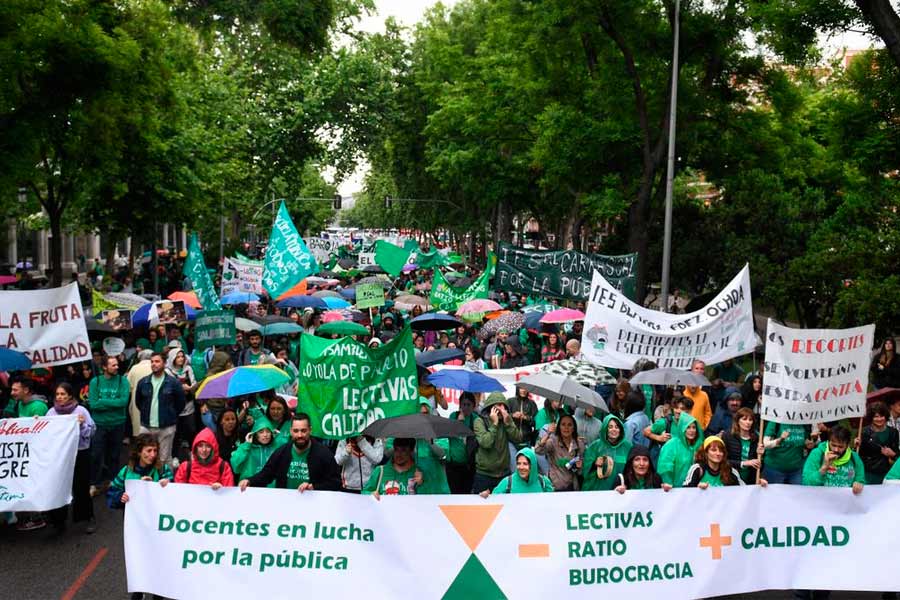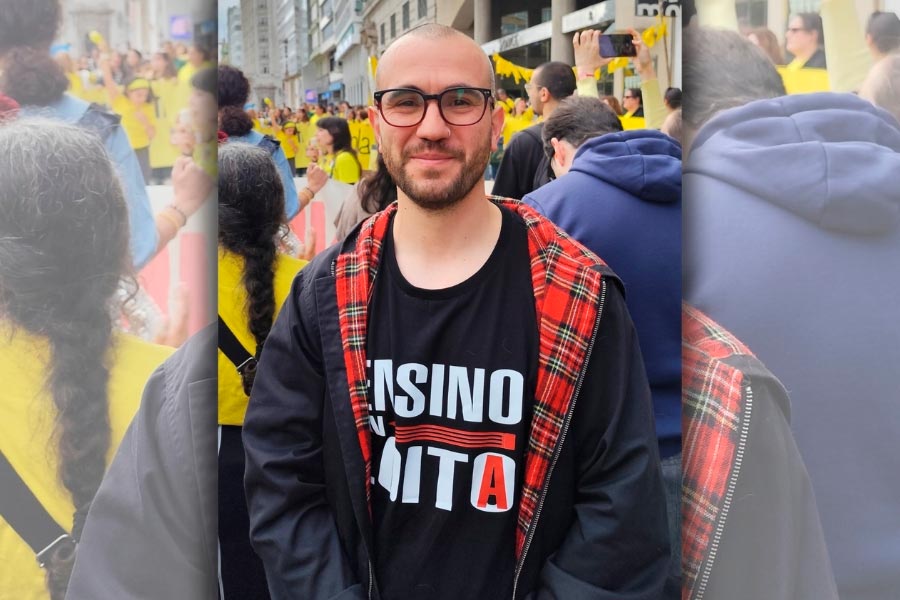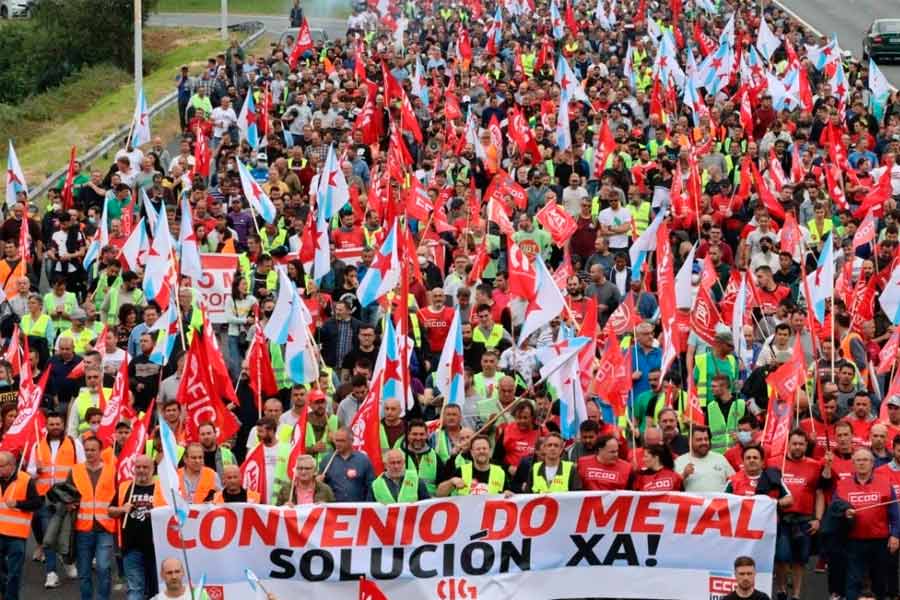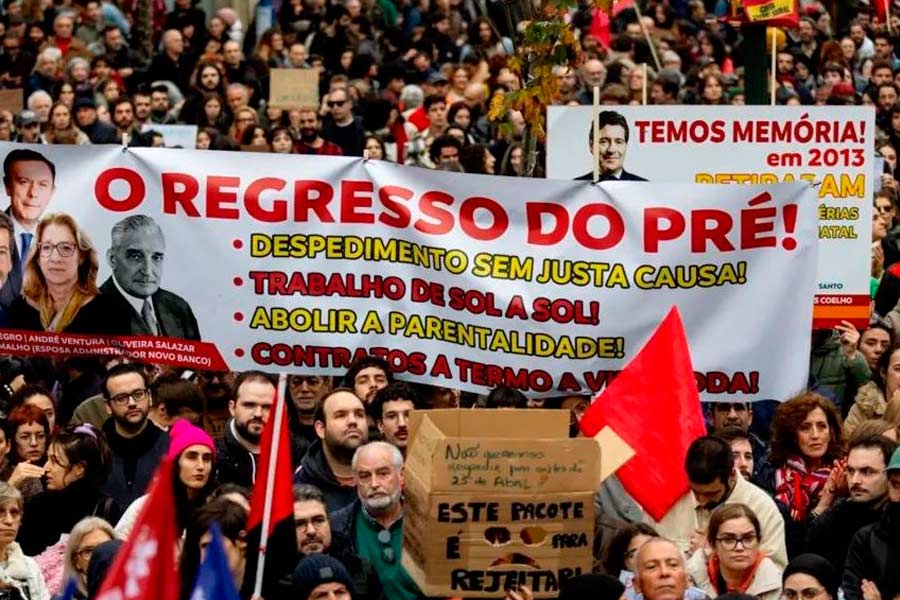




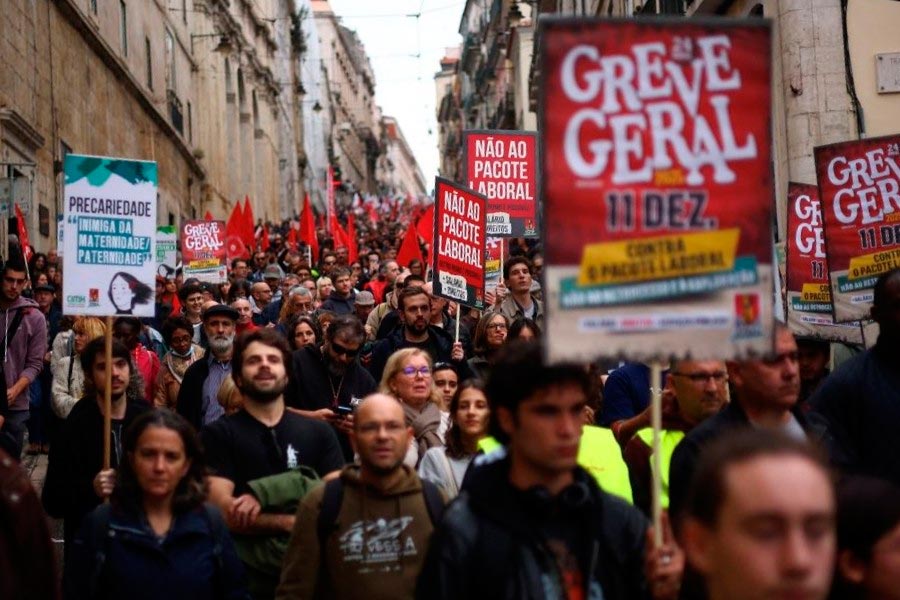
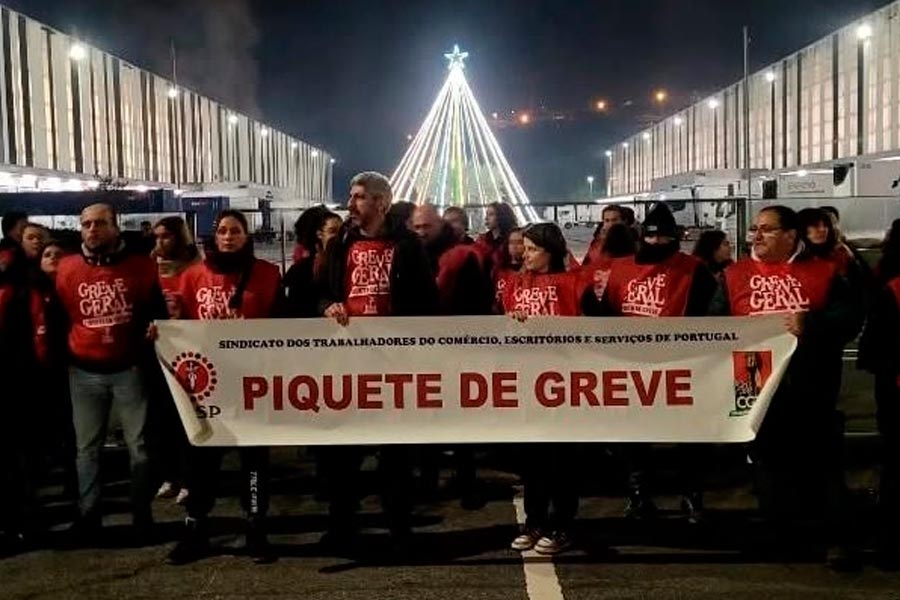
Photos and videos of our participation in Lisbon and Porto
We have the strength to defeat the labour package and overthrow the capitalist government! We must intensify the struggle!
The general strike on Thursday, 11 December, against the labour package was the largest in the country's history, according to estimates by the CGTP and UGT: more than three million workers went on strike! Tens of thousands also took part in demonstrations organised by the CGTP in more than a dozen cities from north to south and on the islands. We workers have demonstrated, without a doubt, our total rejection of the labour package and the attacks by the AD government.
High turnout for the strike and demonstrations
Shortly before midnight on the 11th, picket lines were already multiplying at dozens of companies: Autoeuropa, CTT, Carris, CP, STCP, several hospitals, waste collection, etc. From the start of the day, it was already clear that the general strike would be very forceful.
In industry, the list of factories without production is extensive and includes the country's largest factory, Autoeuropa, which came to a complete standstill, and several of its suppliers with participation rates of over 80%.
The services sector also recorded high figures. Municipal services were closed in municipalities such as Setúbal, Palmela, Moita, Amadora, Évora, Loures, Sintra, Seixal and Vila Franca de Xira.
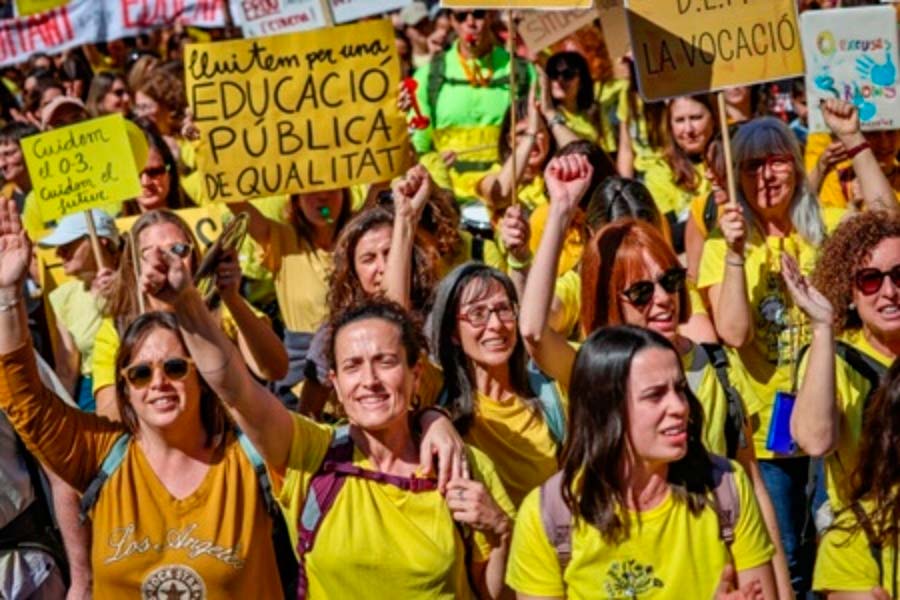
In the education sector, virtually all educational establishments closed, with massive participation by all staff, both teaching and non-teaching. Universities and researchers also joined the strike in greater numbers than usual. In healthcare, hospitals only provided emergency services, with participation rates above 90% in all large public hospitals. Health centres also closed. In the care sector, dozens of IPSS (Private Social Solidarity Institutions) and nursing homes joined the strike in varying percentages.
The transport sector, traditionally very strong, only provided minimal services. This was the case for CP, Transtejo/Soflusa and Fertagus in Lisbon, and CP and STCP in Porto. The Lisbon metro closed and the Porto metro only opened one line. At Lisbon airport, half of all flights were cancelled: 100% for TAP and SATA and 80% for Easyjet.
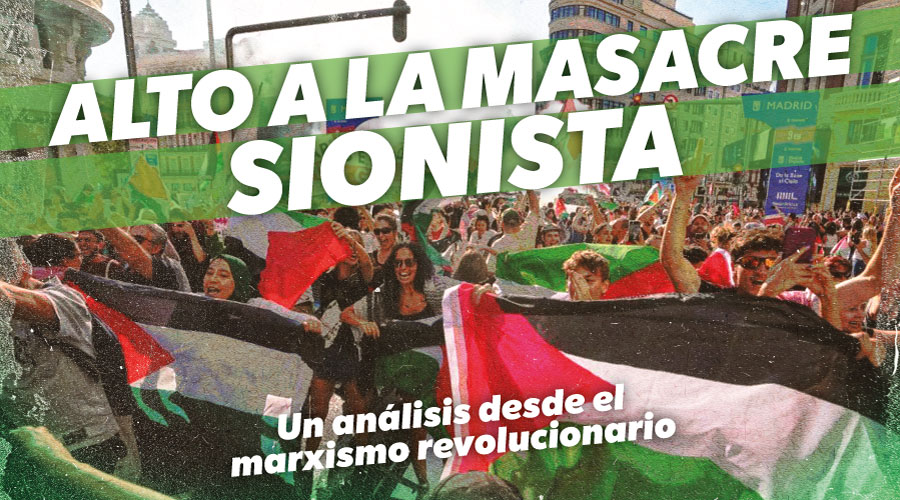
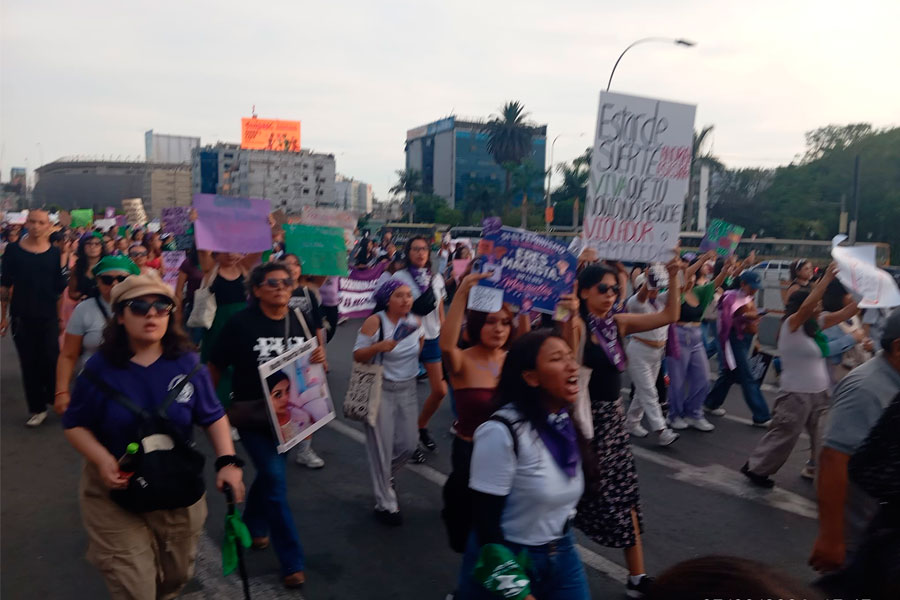
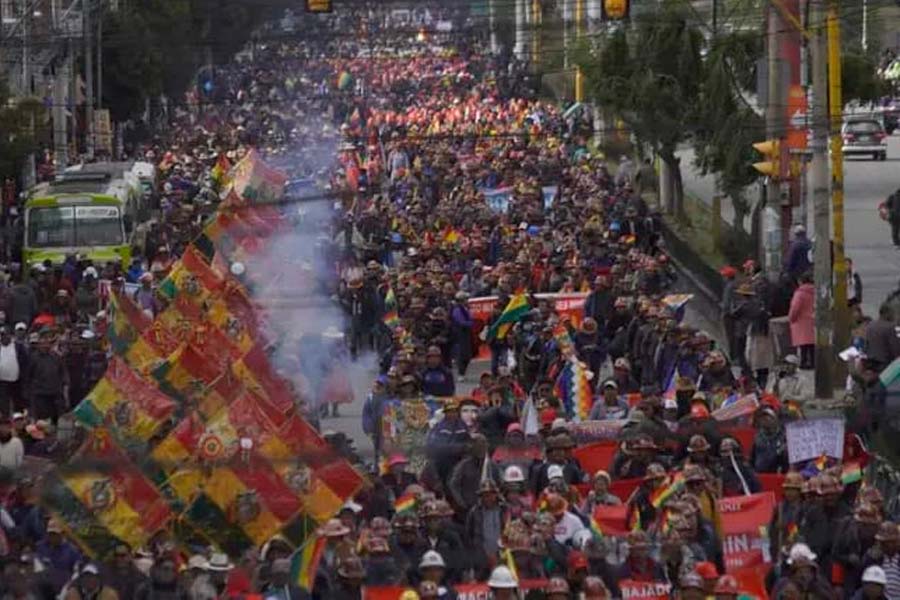
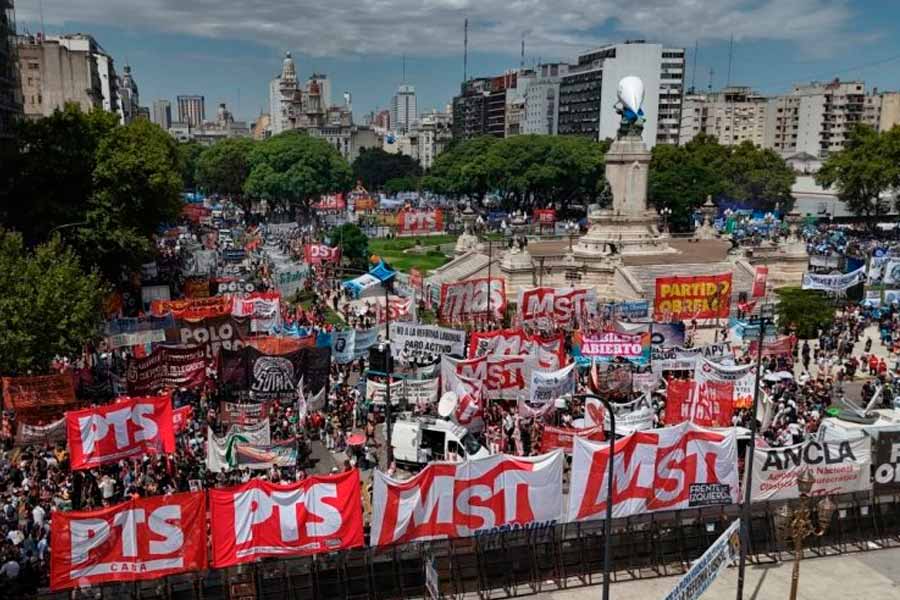
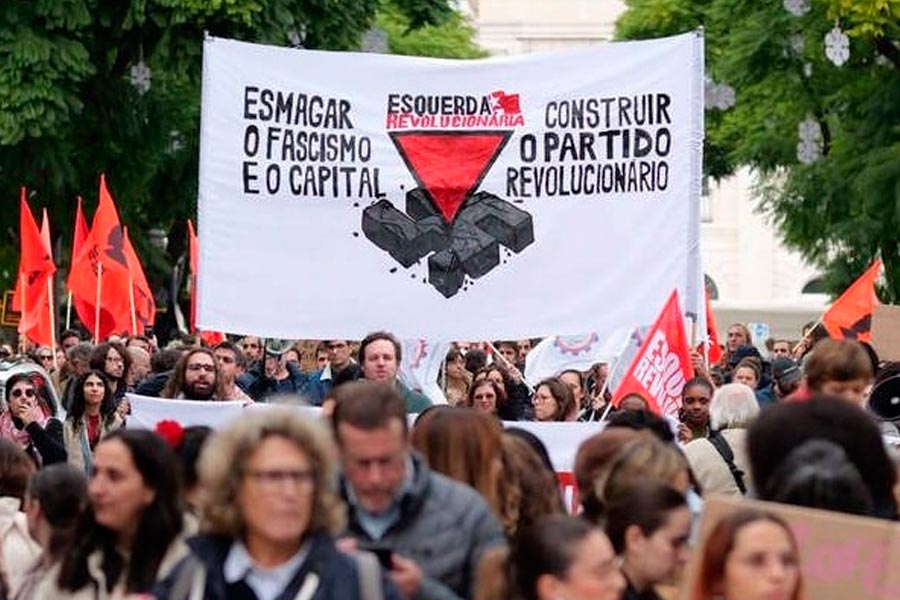
In contrast to the paralysed country, tens of thousands of workers took to the streets to give substance to the general strike and their demands. Esquerda Revolucionária participated in the demonstrations in Lisbon and Porto with combative blocs, calling for unity between immigrant and national workers and the fall of the government.
In Lisbon, more than 30,000 people took part in the march from Rossio Square to the Assembly of the Republic. During the two-hour march, the demonstrators chanted non-stop slogans against the labour package — ‘With the labour package, those who work suffer’ and ‘Nobody wants Luís' package!’ — and for the unity of the working class — "Down with the labour package! We are all here, immigrants and nationals!‘ and ’No one is illegal! Capital is illegal!"—but also for the fall of the government, against AD (Democratic Alliance), Chega and the employers.
In Porto, 10,000 people took part in the march along Avenida dos Aliados in an atmosphere of anger and combativeness, essential ingredients for the growth of the movement. After the demonstration called by the CGTP, some demonstrators continued their march spontaneously. The will to fight is immense.
The government and employers failed to stop the strike.
This enormous show of strength by our class and rejection of the government and its policies left the government with no choice but to ignore reality and declare that the strike was ‘insignificant’. For many workers, the best proof that this was not the case, apart from the images of picket lines and demonstrations, was seeing the streets of their cities and the roads connecting the suburbs to the centre, especially in the Lisbon region, completely empty during the morning.
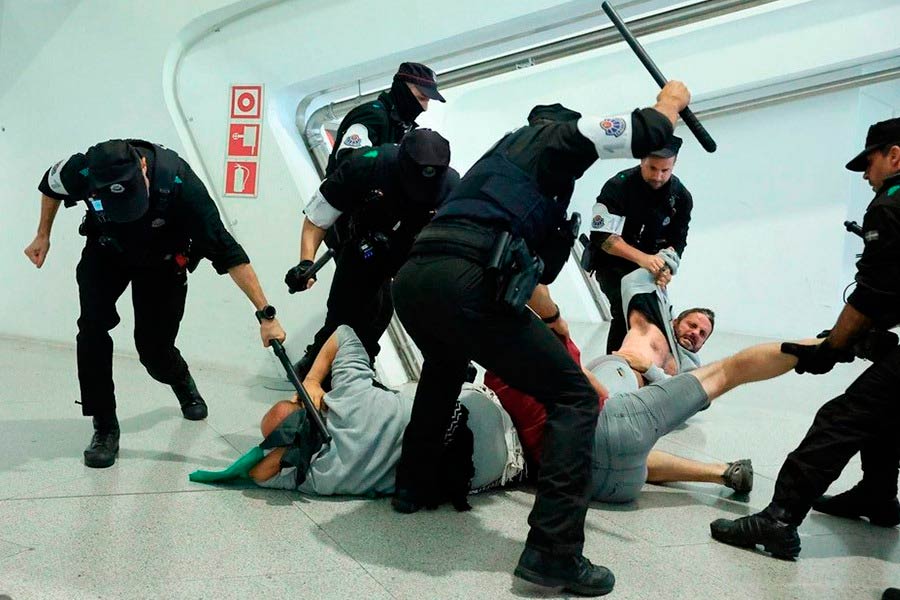
There is no doubt that, despite its failure, the government tried everything to make the strike fail. First, it tried to convey the idea that a general strike ‘makes no sense’ when the economy is growing and wages are rising. Even the international bourgeoisie came to its aid with propaganda through The Economist newspaper, which named Portugal the ‘economy of the year’. An economy that grants fabulous profits to the bourgeoisie at the expense of the growing misery of the workers, who have wage increases below inflation! Later, days before the strike, desperate to realise that this rhetoric would not prevent large participation, it tried to demobilise by announcing a minimum wage of €1,600 for an unspecified future date, which also failed. Finally, when the propaganda failed, he resorted to action. He used the armed wing of the capitalist state, the police, to illegally break up the STCP pickets in Porto and the Carris pickets in Musgueira, preventing contact between trade unionists and workers.
Employers also attempted to stop the strike by replacing workers and paying their transport costs, as happened at the Pingo Doce and Lidl supermarkets. The pressure exerted by employers in all workplaces to prevent the strike continued with the harassment of strikers the following day. The dictatorship of capital is becoming increasingly evident as the class struggle intensifies.
The struggle must intensify!
The anger and combativeness of today's protesters was not directed solely at the labour package. For six months, the government has been attacking the rights of our immigrant brothers and sisters, increasing military spending while cutting the NHS (National Health Service) and public services, putting the lives of pregnant women and babies at risk, and adopting measures that increase already high rents... In recent months, we have witnessed even more degradation and misery, while the profits of large corporations continue to break records. It is necessary to overthrow this government of capital and the capitalist system that spawned it, and this need is clearly evident in the minds of the most advanced layers of the working class and youth.
We demonstrated our strength, combativeness and will to achieve this. This general strike was only the first step. Now, it is necessary for the rank and file of the CGTP (General Confederation of Portuguese Workers) to take up these objectives and force their leaders to present a plan to intensify the struggle, with assemblies throughout the country to build a general strike of more than one day and large demonstrations centred in the main cities of the country.
Down with the government of capital! Join the Revolutionary Left!